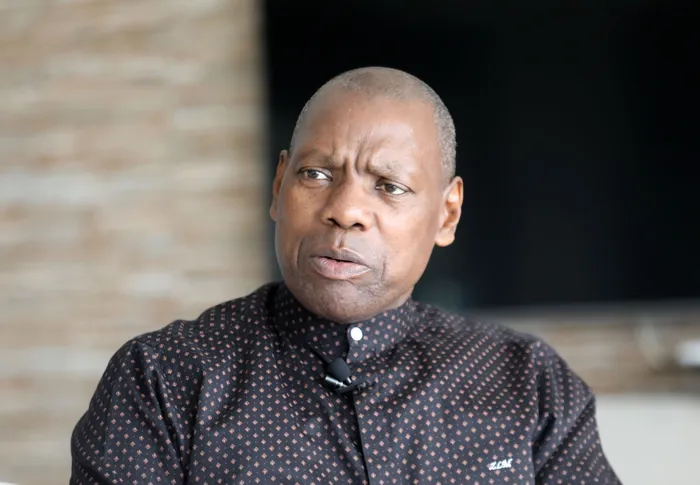
Chairperson of the cooperative governance and traditional affairs (Cogta) portfolio committee, Dr Zweli Mkhize says the committee had picked up that a number of municipalities were filling vacancies on the eve of the change of administration.
Parliament’s local government oversight committee has raised concerns about municipalities that are making last-minute appointments and also issuing large contracts on the eve of this week’s local government elections, which may overburden the incoming administration.
Chairperson of the Co-operative Governance and Traditional Affairs (CoGTA) Portfolio Committee, Dr Zweli Mkhize, said the committee had picked up that several municipalities were filling vacancies on the eve of the change of administration.
The outgoing municipal councils’ term ended earlier this week as South Africans go to the polls tomorrow to elect new councils.
While there appears to be no law barring municipalities from filling vacancies close to elections, Mkhize said the practice was questionable.
“In principle, the question is, can you burden an incoming administration with officials who were selected by the outgoing team?
“It raises suspicion of why, over the past five years, these posts were not filled, and why suddenly you can fill so many. The other question is, if there are vacancies, can they not wait until the election?"
Mkhize said his committee was wondering whether it could be proven that there was efficiency in the management of the filling of the vacant post, “so that you can't stay for four years, three years or two years with a vacant post, and only remember to fill it on the eve of a new administration being inaugurated”.
“From that point of view, we would want to say, we need to eliminate any sense of suspicion that there were other motives for filling up the posts at that time. We are not advocating that you should leave all vacant posts for the new administration to fill in, but we are saying we need to demonstrate that it was because they were vacant, and it was because, by the time by which they should have been advertised, that you actually went and did that advertisement.
“It should not create an impression that, for a long time, the municipality was limping, working in acting capacity and nobody paid attention, and suddenly now, some assurances have to be made to appoint certain people.”
Earlier this month, EFF MP Carl Niehaus asked CoGTA Minister Velenkosini Hlabisa whether he was aware of the “last-minute mass appointments” of senior municipal officials in the Mangaung Metropolitan Municipality before the local government elections and whether the appointments complied fully with the law. The municipality advertised 38 positions with several of them being managerial positions.
Niehaus said that his theory was that the outgoing administration was “trying to rule from the grave so that whoever comes into power after the elections will be faced with a fait accompli” and won’t be able to change their appointments.
Niehaus said it was reasonable to expect senior appointments, close to an election, should not be filled, to give an opportunity to the newly elected council to fill those positions.
“That is for me the bottom line. For them to rush it through now is a demonstration of bad faith,” he said.
In his response to Niehaus, Hlabisa cited laws which provide for appointments of municipal managers and managers directly accountable to municipal managers, saying municipal councils make these appointments and have to submit the prescribed appointment reports to the MEC responsible for local government for compliance assessment and onward reporting to the minister.
He said he had not been formally informed of the alleged last-minute mass appointment of senior municipal officials in Mangaung, adding that the law does not require his prior concurrence or approval for municipal staff appointments.
He said his department was engaging the Free State provincial department responsible for local government to verify the allegations and establish the factual position and that the allegations relating to potential cadre deployment, electioneering through the state or attempts to bind an incoming municipal council had not been established.
Early last month, Hlabisa told the CoGTA committee that in terms of the law, a municipal manager is employed in a manner that his or her contract overlaps by one year between administrations.
“There must be one year overlapping to ensure that he or she manages the transition from the old council to the new council. There is no municipal manager who is employed more than a year after the elections, and that is determined by the law,” said Hlabisa at the time.
Mangaung Municipality’s Acting General Manager for Communication, Nicolette Maysiels, said while the municipality advertised the positions and undertook the recruitment process within the applicable laws, it considered it appropriate to defer the finalisation of the appointments until the new council was constituted.
“This decision was guided by the principle of fairness and the need to ensure that the incoming council is allowed to assume its responsibilities without being prejudiced by appointments finalised immediately before the transition to a new council term.”
Maysiels said the recruitment process was initiated in response to concerns raised by the auditor-general regarding the municipality’s high vacancy rate, as well as the sustained overtime expenditure incurred over the past decade.
“The municipality emphasises that the decision to defer the appointments does not, in itself, invalidate the recruitment process already undertaken. The process will be considered for finalisation after the new council has been constituted, subject to the applicable legislation, recruitment policies and procedures.”