I don't think any smartphone has ever been quite as polarizing as the iPhone Duo. After years of waiting for Apple's first foldable, the result is a phone that borrows some lessons from its Android counterparts, ignores plenty more, and feels like Apple is still figuring out what customers actually want from a foldable. Yet, despite some questionable decisions, I can't put it down. That contradiction is what makes the iPhone Duo so fascinating.
My verdict hinges on one factor I think many hardware comparisons overlook: the hidden superstar of Apple's developer ecosystem. It's both a blessing and a curse for Apple's first foldable, but in very unequal proportions. There will be short-term pain as developers, Apple, and users figure out what's possible, but the long-term gain could be enormous.
Objectively, the iPhone Duo gets plenty right, and Apple's choices seem unnecessarily complicated in places, especially since Android manufacturers have spent almost a decade solving many of the same problems. As someone who uses iOS and Android side by side, I appreciate the desire for consistency across Apple's ecosystem. But consistency shouldn't come at the expense of functionality, and some of Apple's decisions feel like an attempt to reinvent solutions that already work.
And yet, I keep reaching for it. Its utility alongside my other Apple devices is difficult to overstate, and the polarizing D-shaped design has grown on me considerably. In fact, it might be my favorite form factor for one-handed use. That's quite a turnaround from my initial reaction. My first 15 seconds with the Galaxy Z Fold 8 told me I loved it; the iPhone Duo took considerably longer. But the destination was the same, and that's an important lesson: unless a design is fundamentally flawed, living with it can change your perception in ways a hands-on session never will.
The iPhone Duo is the perfect foldable for me
Nirave Gondhia
The inner display is another example. Here, I think Apple has pulled an absolute blinder. The nano-texture layer doesn't just make the crease less distracting; it transforms the screen's entire feel. There's a welcome friction under your fingertips that reminds me of reading on an Amazon Kindle or using TCL's NxtPaper displays. It's wonderful for reading, scrolling, and typing, and makes the experience feel easier on the eyes without compromising brightness. After two weeks, I haven't had a single concern about visibility on either display, even in challenging conditions.
Then comes the inevitable question: is it worth $2,000 or more? That depends almost entirely on what you want from it. For me, the value isn't simply having a folding screen. It's being able to progress coding sprints, access my Mac remotely, and keep working from virtually anywhere in the world, even on airplane Wi-Fi. It's the pocket-friendly, always-connected folding iPad I've wanted for years, though it could benefit enormously from some iPadOS-inspired software capabilities. It finally brings a level of multitasking and utility to an iPhone that changes how I use it. For me, that's worth the asking price, and the reactions from others I've shown it to suggest I'm not alone.
Apple has at least given its first attempt some reassuring foundations. IP68 dust and water resistance, a weight that's only around 50 grams heavier than the Galaxy Z Fold 8, and the reassurance of AppleCare all help make the compromises easier to live with. But this is still a first-generation product, and Apple's approach will inevitably evolve. Samsung has had years to refine its foldables, and Apple is starting that journey considerably later. There is plenty of catching up to do, and I expect the next generations to be even slicker.
Ultimately, the iPhone Duo might be Apple's most divisive iPhone yet, but dismissing it for what it gets wrong misses what makes it so compelling. Like every first-generation foldable, it charts a different path, makes compromises, and delivers a novelty that established designs simply can't replicate. More importantly, Apple's ecosystem gives it room to grow in ways that extend far beyond the hardware: developers will discover new experiences, users will find new workflows, and missing features will gradually be replicated or surpassed.
The iPhone Duo isn't the perfect foldable, and it doesn't need to be. It's a glimpse of what happens when Apple's ecosystem finally meets a folding iPhone. There are plenty of reasons to wait for the second generation, but after two weeks, I know one thing: I don't want to put this one down. It might not be perfect for everyone, but it's pretty damn close to perfect for me.
Price & Availability
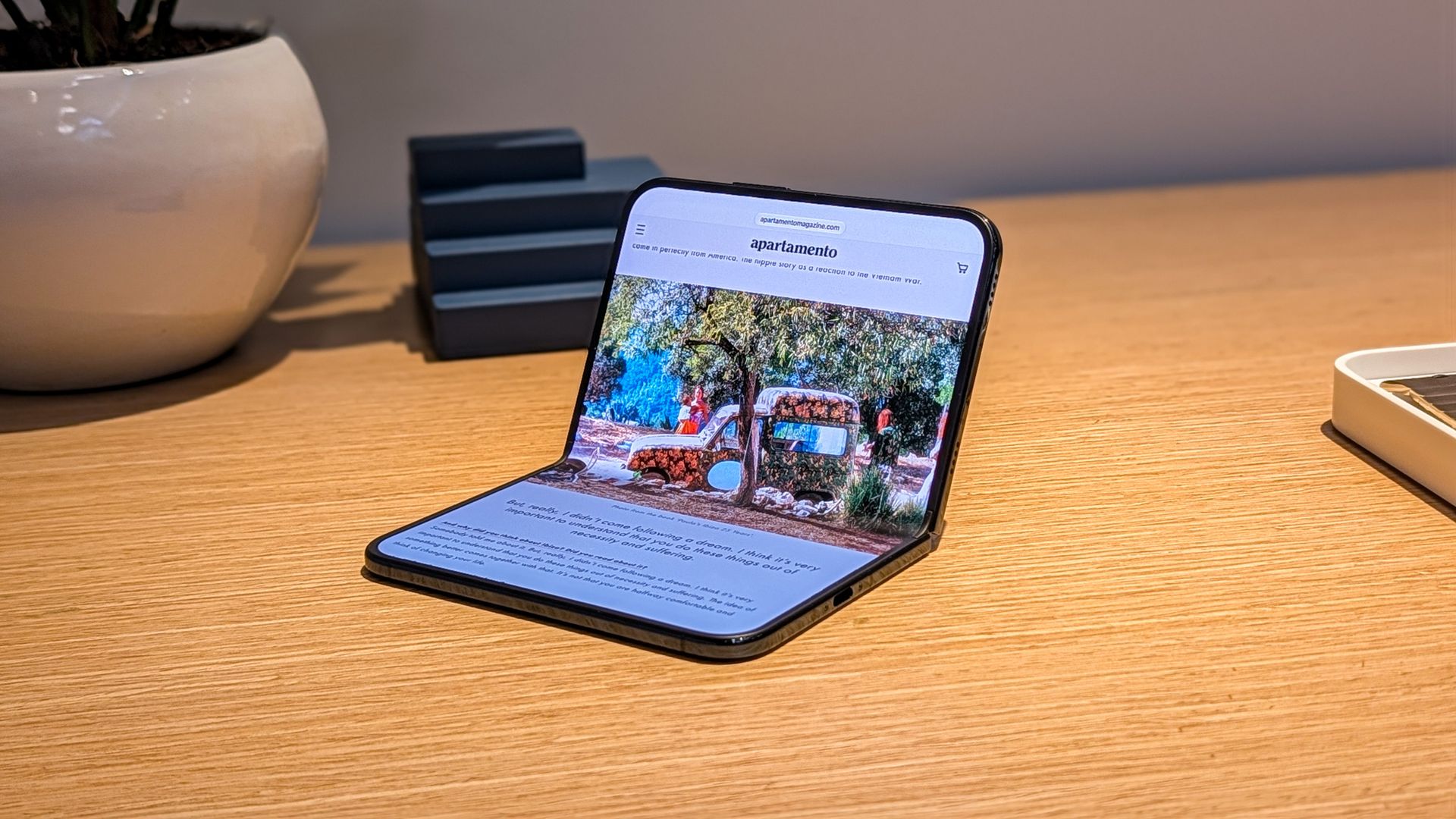
One of the biggest surprises about the iPhone Duo is its starting price: $2,000 in the US and £2,000 in the UK. That's for the 256GB model, and surprisingly, it's lower than I expected.
All the rumors leading up to launch suggested a record-high price, or at least a higher starting point than the competition. Instead, the iPhone Duo seems relatively well-priced by comparison. It's $100 more than the similarly sized Galaxy Z Fold 8, but $200 less than its taller sibling, although both of Samsung's foldables are currently available with sizable discounts.
Of course, 256GB is less storage than Samsung's double-your-storage launch promotion offers, and it falls short of the 512GB included with the Motorola Razr Fold, which starts at $1,899.99. Even accounting for any perception of an Apple tax, the premium seems surprisingly modest. By most comparisons, the iPhone Duo is fairly priced.
But how does it compare with Apple's own lineup? The iPhone Air is perhaps its closest match in terms of specifications and premium novelty, starting at $1,099. The new iPad mini costs $799, with a further $100 premium for the nano-texture finish. Put those together, and you're spending just $1 less than the iPhone Duo. It's hardly a scientific comparison, but it makes an interesting point: you're getting elements of both devices in one pocket-friendly package. If you were already planning to buy both, the iPhone Duo starts to look like a compelling proposition. I'd argue it's better value than its price tag might initially suggest.
The reactions from people I've shown it to largely support that. Three fellow passengers expressed genuine admiration; two immediately saw the utility and said they'd buy one for entirely different reasons, while the third felt it was simply out of her price range. Three small business owners I showed it to wanted one almost instantly, particularly after seeing how it could transform the way they run their businesses. I even encountered a brave parent who said they'd buy one, although with a six-year-old at home, that struck me as a rather bold investment!
Plenty of carrier deals are also worth considering, with all the major US carriers offering substantial trade-in credits to bring the cost down. Ten days after launch, the iPhone Duo is still sold out online, with deliveries pushed back until late January. In-store availability continues to fluctuate faster than a politician changes their stance.
Everyone should copy the iPhone Duo’s nano-texture screen
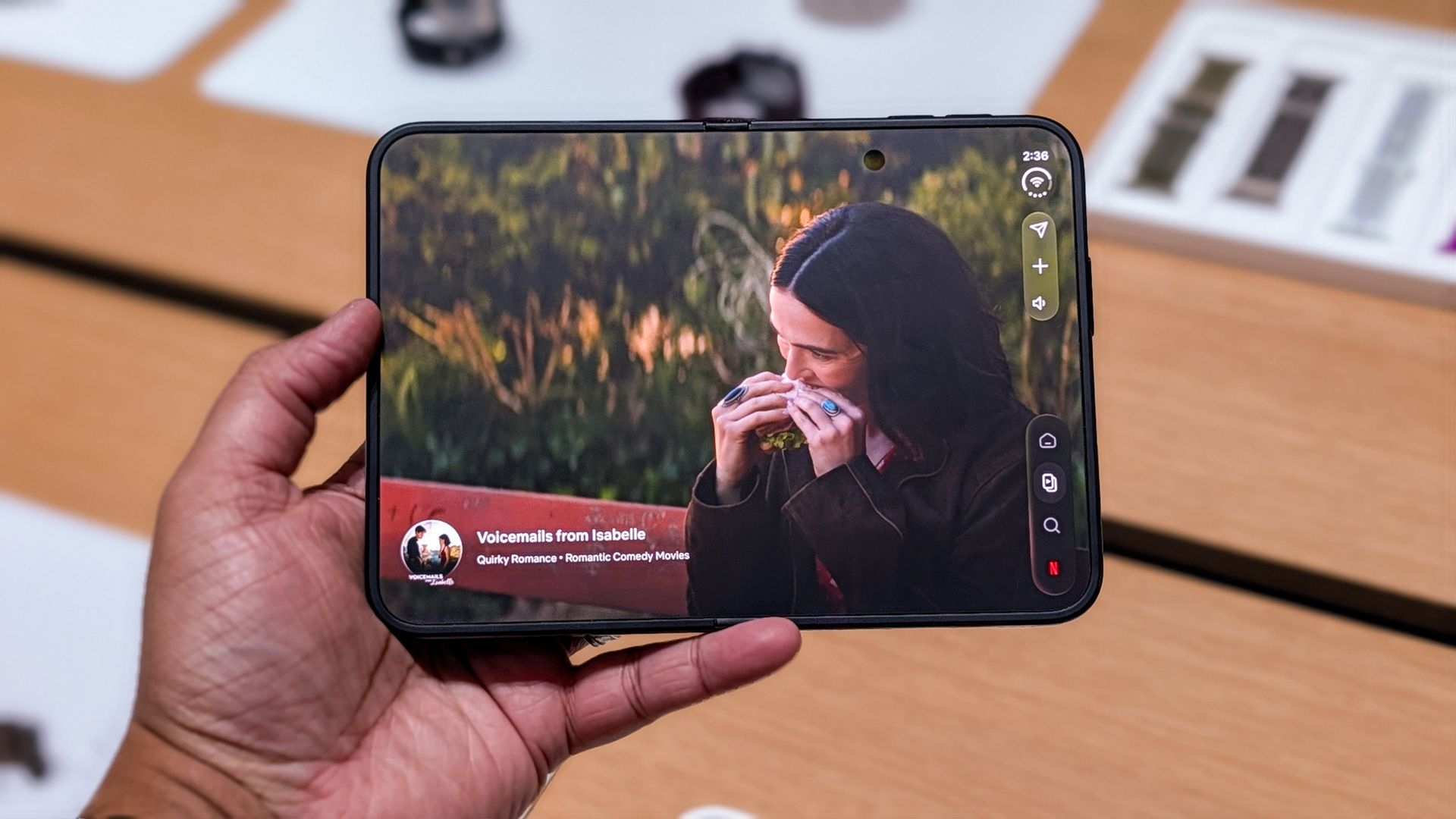
There, I said it: Apple’s implementation of nano-texture is so enjoyable that I hope every foldable manufacturer copies it. Apple wasn’t the first to bring nano-texture to consumer devices, but its implementation on the iPhone Duo is a genuine differentiator, and for reasons that go well beyond the specifications.
The first is visibility. Apple seems to have understood something important about foldable screens: it’s not necessarily the crease depth that matters, but how much you notice it. The Oppo Find N6 might have the shallowest crease of any foldable, but the iPhone Duo’s nano-texture finish makes its crease far less distracting in everyday use. Apple hasn't eliminated the compromise; it's made it easier to forget.
The same philosophy applies to the under-display camera. Frankly, it isn't very good, but that's almost beside the point. Most of the time, you forget it's even there because it blends so seamlessly into the screen. It's a trade-off I’m happy to make: a less intrusive camera and a less noticeable crease, even if neither is technically the best implementation available. Sometimes the better experience isn't the one with the better specifications.
The iPhone Duo proves that sometimes the better experience isn't the one with the better specifications
Nirave Gondhia
Beyond that, the display itself is excellent. The nano-texture finish covers a 7.6-inch LTPO Super Retina XDR OLED panel, which is a lot of letters to describe the premium screen you'd expect at this price. It supports a 120Hz refresh rate, HDR10, Dolby Vision, and up to 3,000 nits of peak brightness in bright conditions. The unusual 1.42:1 aspect ratio is particularly interesting for multitasking, allowing two vertical apps to sit side by side. Or, as we'll explore later, it lets Apple retain a side rail while dividing the remaining space into two smaller iPhone-like experiences. The 5.4-inch cover display retains a similar aspect ratio and many of the same premium characteristics, albeit without the nano-texture finish.
Over the past two weeks, I've used the iPhone Duo on planes, trains, and automobiles, both at home and abroad, and one thing has become abundantly clear: both displays are a joy to use. I haven't encountered any brightness or visibility concerns, regardless of the conditions. There have been reports of display failures, as there are with other foldables, but it's too early to draw meaningful conclusions about their frequency or long-term durability.
Ultimately, this is the big iPhone display, or pocketable folding iPad, I've been waiting for. The specifications are impressive, but what makes it special is how little you notice the technology getting in the way.
A decidedly non-flagship, non-Pro iPhone camera
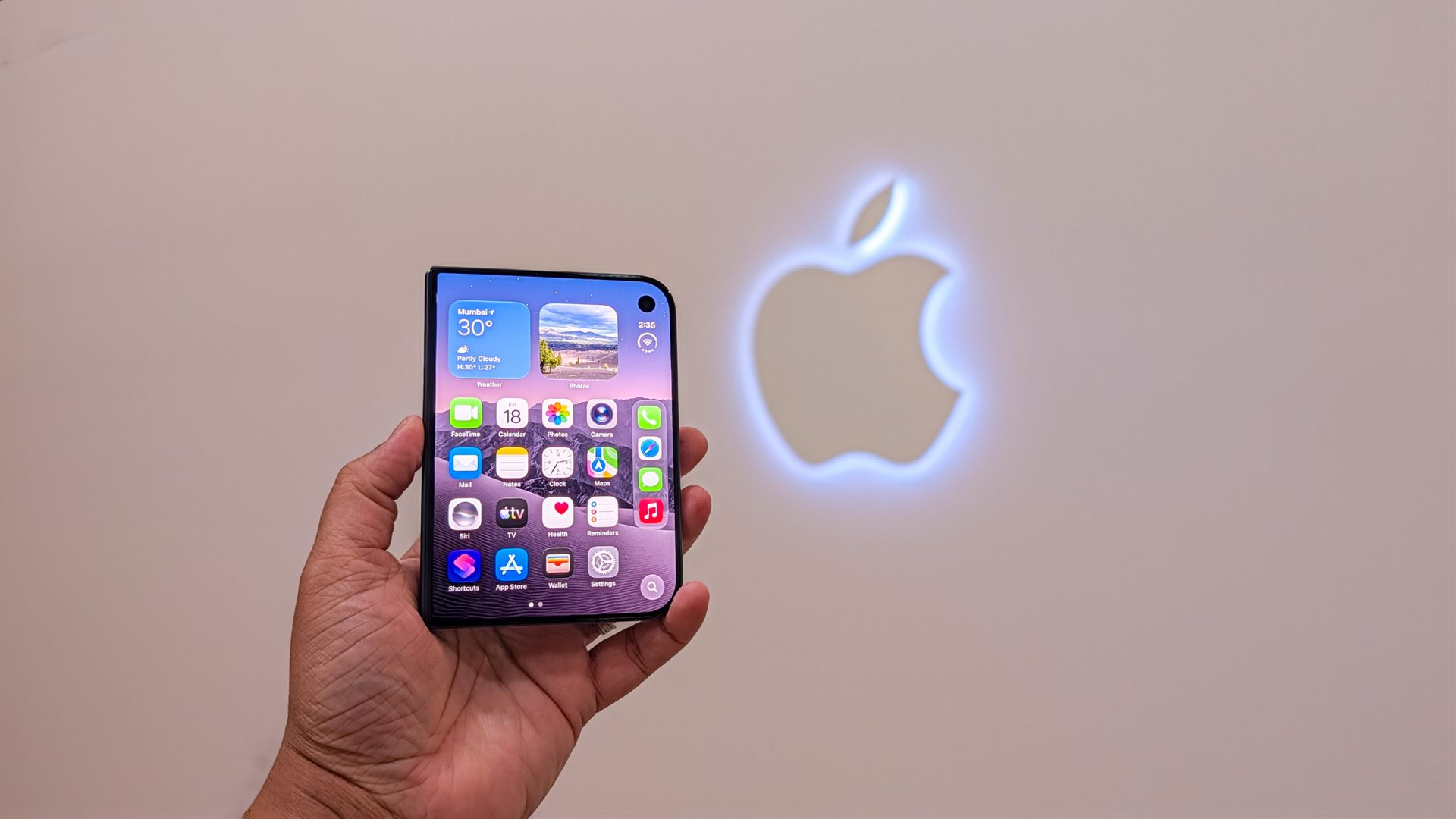
For a $2,000 phone, the iPhone Duo has a surprisingly ordinary camera system. It's not bad, far from it, but it's a clear reminder that even Apple's first foldable comes with compromises, and cameras are among the biggest.
Foldables have always involved trade-offs, particularly when it comes to camera hardware. The smaller passport-style designs are even more constrained by space, which helps explain why Samsung and Apple have opted for two rear cameras rather than three. But Huawei and Xiaomi have already demonstrated that you can fit a triple-camera system and a sizable battery into a similarly compact foldable. It's clearly possible; Apple has simply chosen different priorities, and I suspect most Western manufacturers will continue down the two-camera path for now.
 Nirave Gondhia / Android Central
 Nirave Gondhia / Android Central
 Nirave Gondhia / Android Central
 Nirave Gondhia / Android Central
 Nirave Gondhia / Android Central
 Nirave Gondhia / Android Central
 Nirave Gondhia / Android Central
 Nirave Gondhia / Android Central
 Nirave Gondhia / Android Central
 Nirave Gondhia / Android Central
 Nirave Gondhia / Android Central
 Nirave Gondhia / Android Central
 Nirave Gondhia / Android Central
 Nirave Gondhia / Android Central
 Nirave Gondhia / Android Central
 Nirave Gondhia / Android Central
 Nirave Gondhia / Android Central
In everyday use, the iPhone Duo's cameras are good, but rarely great. Like the iPhone Air, it lacks a capable dedicated zoom camera, and while the 2x in-sensor crop on the main sensor helps, it's no substitute for a proper telephoto lens. You're not buying the Duo for its cameras. That said, photos at standard focal lengths are more than good enough for most situations, and the foldable design brings its own advantages. Using the rear cameras for selfies, with the cover screen doubling as a viewfinder, is particularly useful.