Having USB ports on the front of your desktop is convenient, but they might cost you power and speed.
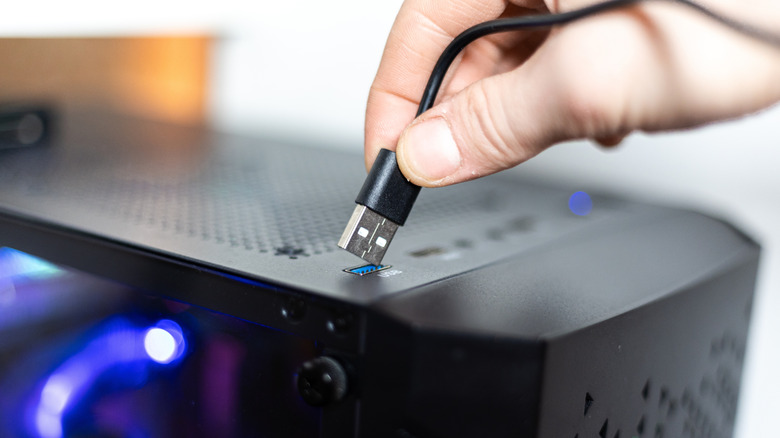
Most desktop computers have USB ports on the front, which is convenient. Instead of reaching around to the back of the case and fumbling for the right port every time you need to connect a device, you can plug in and unplug your accessories in no time.
This convenience comes with a catch, though. Depending on what you connect to these ports, you may notice that the external device runs slower than it should: your files will take longer to copy and your phone won't juice up as quickly. This isn't a problem with your computer, but rather stems from how front-facing USB ports are engineered in your machine. It's also not a universal rule, as there are modern PCs with high-end ports on the front.
In a lot of cases, you probably won't realize the difference. But if you do notice it, there's a reason why the front ports of your computer are a little bit slower.
Why front USB ports can be slower than the ones on the back
To understand this issue, we need to take a closer look at USB specifications and how motherboards are built. The USB ports on the back of your computer are usually soldered directly to the motherboard, so power and data travel a shorter path over them. Front ports, on the other hand, are connected via extension cables to reach the I/O controllers. Each additional layer in this connection results in signal loss, even if minimal.
Also, most high-end motherboards have more headers for USB ports, which means you can have multiple ports running at higher speeds. But front-panel ports are a different story; in many cases, they share a single connector, which means speed and power are split among all the ports on the front of your PC case. That's all in addition to manufacturers often using slower USB standards for at least some of the front ports.
Take the ASUS ROG Maximus Z790 Hero motherboard as an example — its rear has two 40 Gbps Thunderbolt 4 ports, as well as six 10 Gbps USB 3.2 Gen 2 ports and four more 5 Gbps USB 3.2 Gen 1 ports. While the front panel does have one USB 3.2 Gen 2x2 (theoretically 20 Gbps) port, it also has four USB 3.2 Gen 1 (5 Gbps) ports powered by two headers. That means the available speed is split among the connected devices as a shared pool. On some boards, if you connect two external SSDs to the front at the same time, they will share the same 5 Gbps data transfer rate.
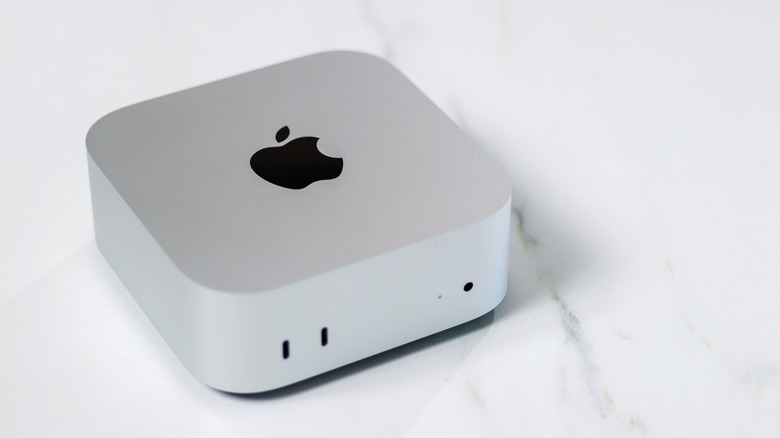
Even Macs have these limitations. The current baseline Mac mini with the M6 chip has two USB-C ports on the front that offer speeds of up to 10 Gbps. But on the back, it has Thunderbolt 4 ports that reach speeds of up to 40 Gbps. The same applies to the latest Mac Studio, with the base model featuring two 10 Gbps USB-C ports on the front and Thunderbolt ports only on the back. The front USB ports are useful, but slower.
What to plug into the front and back of your desktop
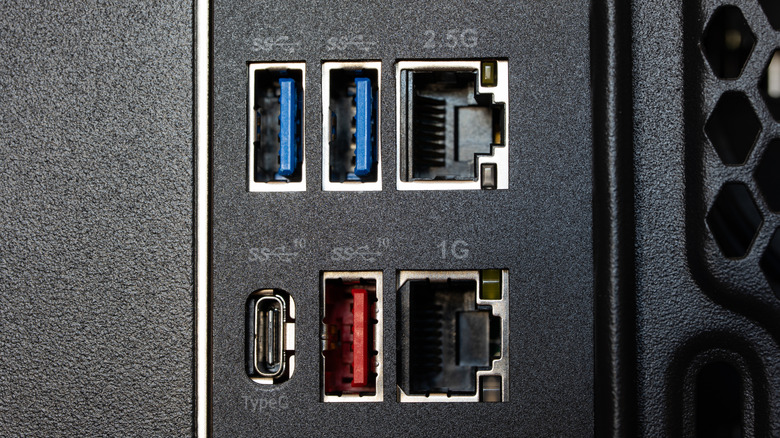
Whether this difference in power and speed will actually affect your peripherals depends on what you're using and what you need. For common devices like a mouse, keyboard or headphones, the ports on the front of your computer handle them just fine. These devices use very little power and don't require high speeds to run. Even a regular USB flash drive is fine to use with them if you don't plan on transferring huge amounts of data or constantly reading and writing.
Choose the rear ports when you're connecting bandwidth-intensive or latency-sensitive peripherals, such as external SSDs, capture cards or VR headsets. Plugging these into high-speed ports will definitely make a difference, and some of them may not even work on slower ports. It's definitely worth checking the specs of your motherboard or computer to see the exact speeds of each USB port so you'll know which one to plug each accessory into. Symbols or colors can give you a hint, but they aren't always consistent.