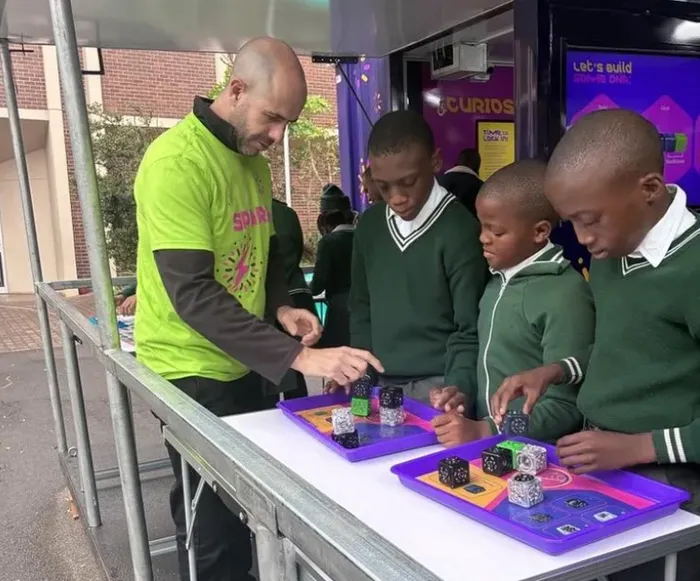
Donovan Alho, Scientist and Merck Account Manager, engaging students on the synthetic biology themed experiment at the Curiosity CubeTM.
Curiosity is often where learning begins. But for many learners in the Eastern Cape, opportunities to explore science through meaningful, hands-on experiences remain limited. I know how important those opportunities can be because my own journey into science began with one person: my high school biology teacher. She sparked my curiosity and passion for science, ultimately influencing my decision to pursue Biological Sciences and build a career in the field.
That experience shaped more than my education. It showed me that one meaningful interaction can change how a young person sees their future. This is why expanding access to STEM learning matters, not only for learners, but for South Africa’s future workforce.
According to South Africa’s 2025 Science, Technology and Innovation Indicators Report, only 29% of university graduates were in STEM fields, while jobs in highest demand are increasingly linked to STEM qualifications. In the Eastern Cape, where 42.9% of National Senior Certificate (NSC) learners take Mathematics, creating opportunities for young people to engage with science in practical, inspiring ways can help transform curiosity into confidence, build critical skills, and open pathways to the careers South Africa needs most.
Hands-on STEM experiences can help change that. They allow learners to build confidence, ask better questions and imagine futures they may not previously have considered. Just as importantly, meeting people who work in science and technology can make these careers feel more tangible and achievable.
This is why programmes such as Merck’s Curiosity platform are important. Its Curiosity Cube™, a mobile, interactive science lab staffed by employee volunteers and university partners, gives learners an opportunity to experience science in a fun, practical and low-pressure environment. The value is not simply in the equipment or activities, but in giving young people access and showing them that science is not something that belongs only in a textbook or laboratory. It is all around us.
Importantly, programmes like this are not about convincing every learner to pursue a STEM career. They are about giving young people the freedom to explore, question and discover what interests them. Sometimes, that exposure is enough to change how a learner sees their own potential.
The human connection matters too. When scientists and STEM professionals share their experiences, including the challenges and mistakes along the way, they can help demystify careers that may otherwise feel out of reach. In my own case, one teacher helped me see science differently. For another learner, it could be a conversation, a programme or a single moment of discovery.
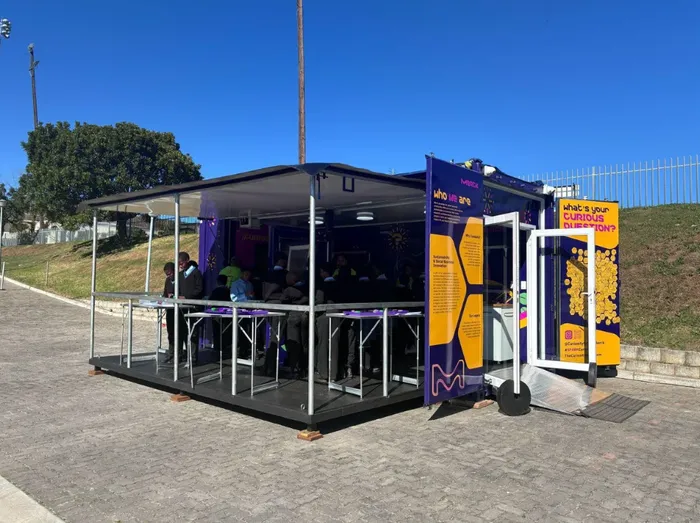
Students exploring the synthetic biology themed experiments during the Curiosity CubeTM stop at Rhodes University in Makhanda.
This is particularly relevant for communities such as Makhanda and Kariega, where technology and life sciences are contributing to the region’s economic future. Preparing young people for what comes next requires collaboration between schools, families, communities, employers and organisations to make learning more accessible and relevant. If we want a workforce that can solve problems, adapt and innovate, we need to start by nurturing the people who will become those problem-solvers.
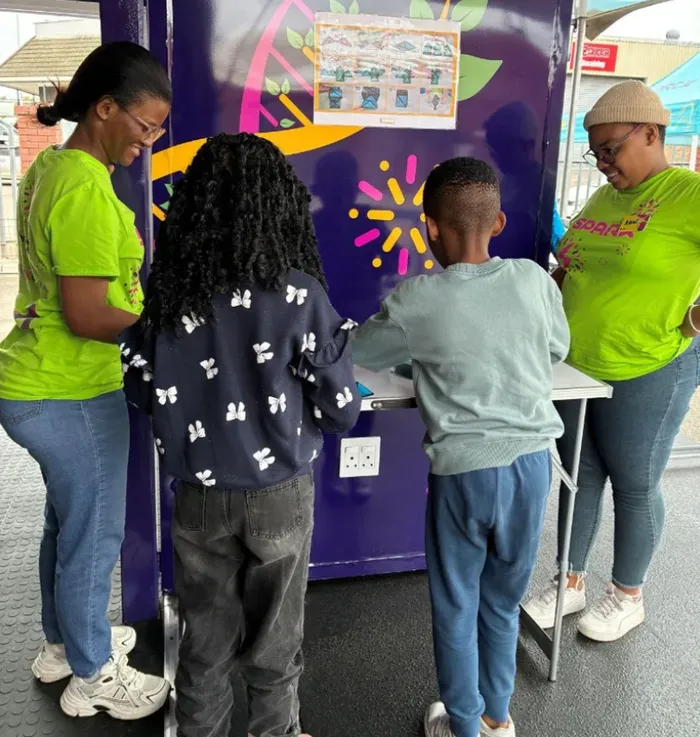
Students at the Curiosity Cube™ while stationed at the Nelson Mandela Bay Science & Technology Center in Kariega
Photo Caption: Students at the Curiosity Cube™ while stationed at the Nelson Mandela Bay Science & Technology Center in Kariega
As the Curiosity Cube™ visits Makhanda and Kariega, it is a reminder that curiosity is worth investing in. Because when we give young people the opportunity to explore, they do more than learn facts. They build confidence.
And sometimes, all it takes is one teacher, one experience or one moment of curiosity to change the direction of a young person’s future.
Discover more about the Curiosity Cube’s 2026 Africa tour and its approach to making science more accessible to young learners here.