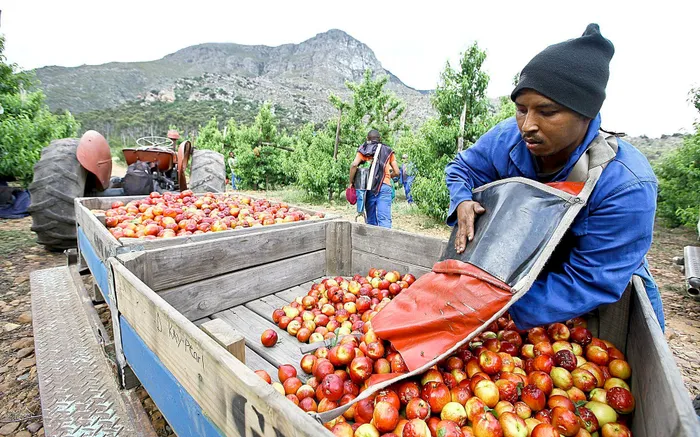
AGOA exit will have a deep impact on the Western Cape.
More than 47 000 direct and indirect jobs supported by Western Cape exports to the United States could come under further pressure after Washington announced plans to end South Africa’s duty-free trade benefits under the African Growth and Opportunity Act (AGOA) from January 2027.
The warning comes as Western Cape exporters have already seen the value of their US sales fall by 41%, with fruit juice, grapes, yachts and wine among the hardest-hit products.
Exporters Western Cape chairman Terry Gale says businesses face the prospect of losing American customers they have spent years building relationships with.
Gale told IOL Media: “The time to do anything about this has passed. This is going to have a negative impact on our exporters and South Africa can ill afford it. Our economy needs every export market and every job it can hold on to.
Gale said the Western Cape’s exposure extended well beyond individual exporters.
US exports already down 41%
“The province’s exports to the US support about R12.98 billion in provincial GDP, 11 914 direct jobs and 35 467 indirect jobs. Any further loss of orders puts those jobs at risk. Exporters were already under severe strain,” he said.
Gale said the value of Western Cape exports to the US dropped by 41 percent, from R16.89 billion between August 2024 and July 2025 to R10.02 billion between August 2025 and July 2026.
Several key export categories recorded steep declines over the same periods.
Fruit juice exports fell 86 percent, from R952.9 million to R136.7 million, while grape exports declined 79%, from R444.2 million to R91.1 million.
Yacht exports dropped 55 percent, from R1.4 billion to R627.6 million. Wine exports fell 38 percent, from R603.1 million to R371.5 million, while citrus exports declined 17 percent, from R2.19 billion to R1.82 billion.
Exporters fear losing customers
Gale said losing AGOA preferences would make an already difficult trading environment worse.
The programme has provided eligible African countries with preferential access to the US market since 2000. Its loss would increase the cost of doing business with American customers, although the impact would vary between products.
Gale said the concern was not limited to the immediate cost of losing preferential access, but also the trading relationships exporters had spent years building.
“We can’t afford to see our trading relationships weakened, least of all with the US. Businesses have spent years building relationships with American customers and investing in the capacity to supply them. Losing preferential access puts those investments under pressure.
“Government needs to work with affected industries to establish where the greatest exposure lies and how businesses can be helped to retain their customers.
“Finding another market is not something an exporter can do overnight. Building relationships with new buyers takes time. There may also be regulatory requirements that cannot be met immediately, particularly by smaller businesses with limited resources.”