Along with a new research hub in Singapore, Google is deepening its academic partnerships in the country with more than $6 million in grants for NUS and NTU — driving breakthroughs in AI for science and compute efficiency, strengthening AI safety frameworks, and nurturing scientific leaders.
Vice President, Google and General Manager, Google Research
Your browser does not support the audio element.
We are providing new research grants to universities in Singapore to support scientific discovery. This funding helps researchers study Alzheimer’s disease, improve computing efficiency, and build safer artificial intelligence systems. By investing in these local institutions, we are helping students and scientists develop the tools needed to solve complex global problems. You can expect these partnerships to foster new breakthroughs in medicine, technology, and human well-being.
Technology is already transforming how we approach the world’s toughest challenges, and continuing that momentum requires supporting the people driving foundational science. With our newly established research hub in Singapore, and as we continue to scale existing health research initiatives in the country — including bringing open models like MedGemma to frontline care settings — Google is also deepening its academic partnerships in Singapore by investing over $6 million in new research grants and capacity-building initiatives at National University of Singapore (NUS) and Nanyang Technological University (NTU).
Backing foundational and applied breakthroughs
Our targeted grants address both urgent biomedical frontiers and the core building blocks of computing:
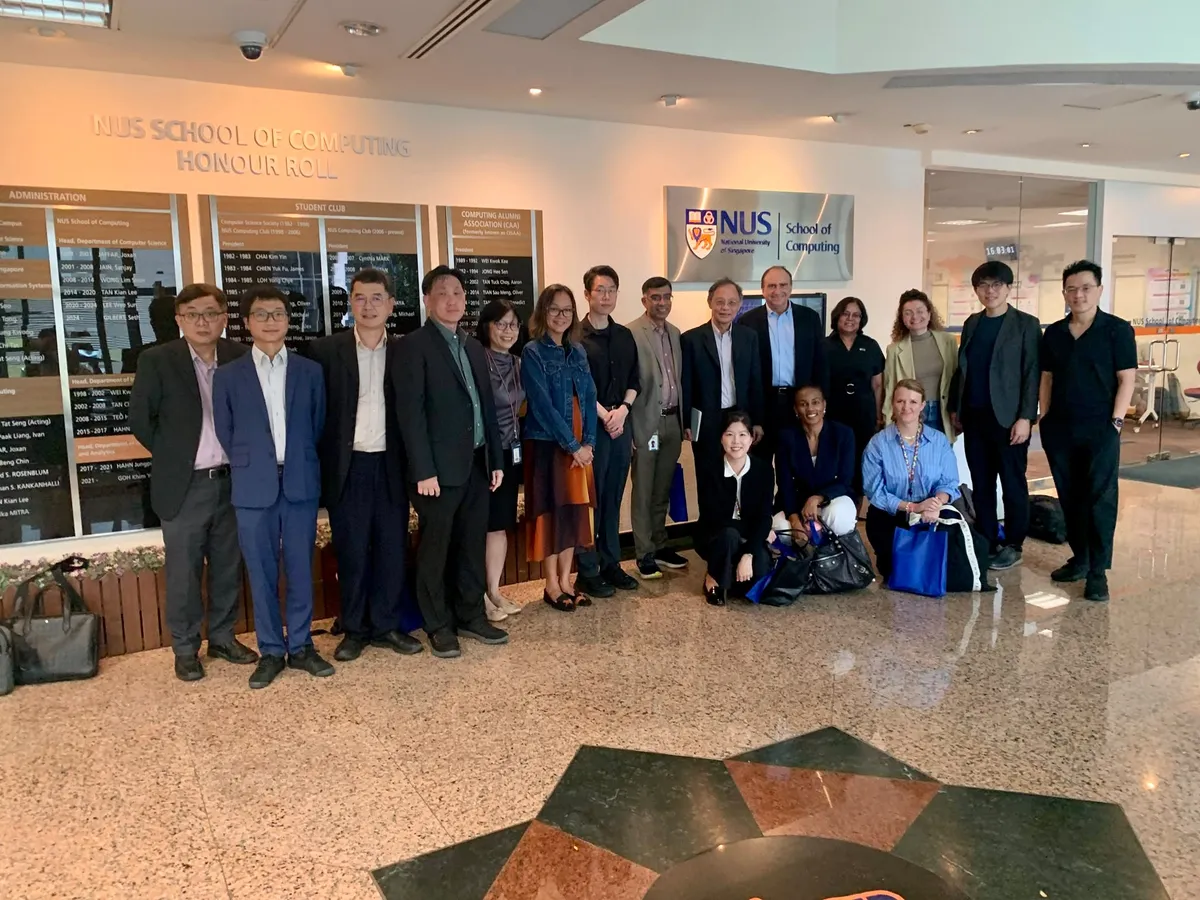
The Google team met with NUS leadership, including Senior Vice Provost Prof. Bernard Tan and Dean of Computing Prof. Tulika Mitra, to align on new research infrastructure and cross-disciplinary workstreams.
Building capacity for research ecosystem and future scholars
Beyond individual research projects, true ecosystem enablement requires investing in long-term institutional infrastructure and talent pipelines.
At NTU, a $750,000 AI for Science Capacity Fund Grant will help build permanent research capabilities across Southeast Asia. Under Professor Ho Teck Hua’s regional academic leadership, this initiative will establish lasting infrastructure, foster internal research agents, and build ethical AI frameworks that elevate the region’s scientific capacity.
Google.org and Google DeepMind are also providing $3 million in funding to support INSEAD’s Thrive Lab in Singapore, which aims to advance global research into how people and organizations can thrive alongside rapid technological change. The lab will explore how education, workplaces, and communities can better support people to develop skills, find purpose, and build meaningful relationships in a changing world.
This human-centered research sits alongside a broader wave of scientific breakthroughs driving the region forward. Whether unlocking insights into neurodegenerative diseases, making models more efficient and inclusive of local languages, or establishing safe research infrastructure, Singapore’s academic community continues to set a global benchmark for innovation. We are proud to enable with our tools and models the faculty, researchers, and students who are not just experimenting with AI, but preparing to lead the next era of scientific progress
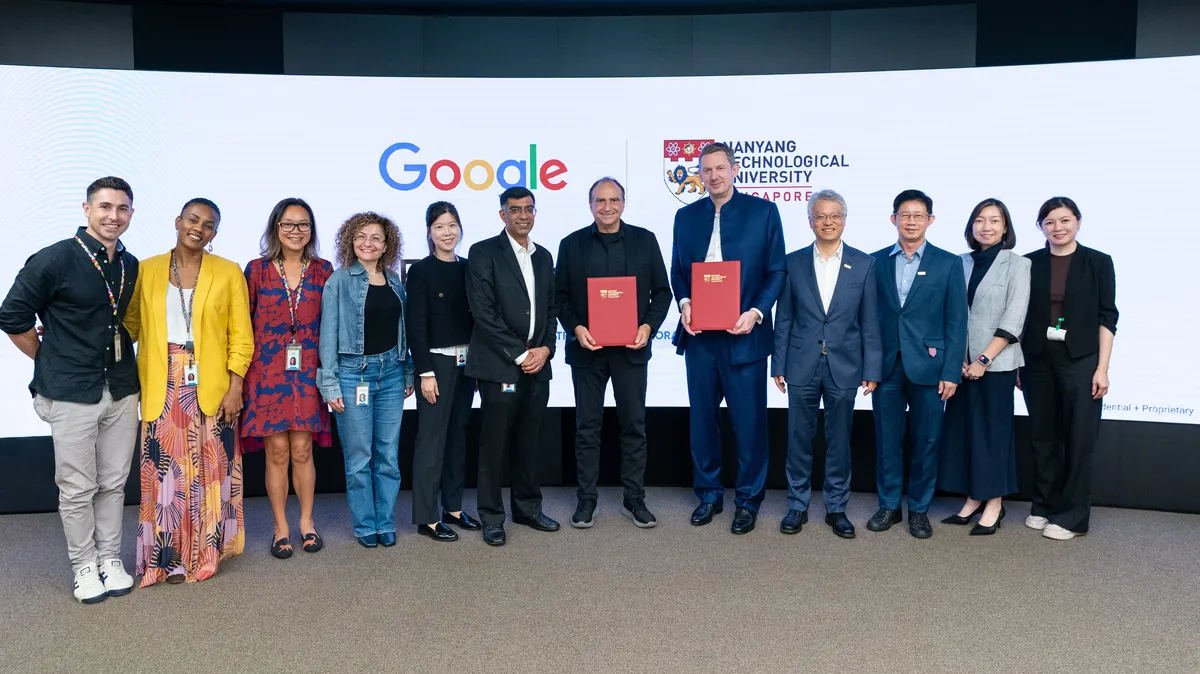
The Google team met with the NTU Deputy President & Provost, Prof Christian Wolfrum and colleagues to discuss partnerships across frontier research and AI safety, science, and education.
Check your inbox to confirm your subscription.
You can also subscribe with a different email address.