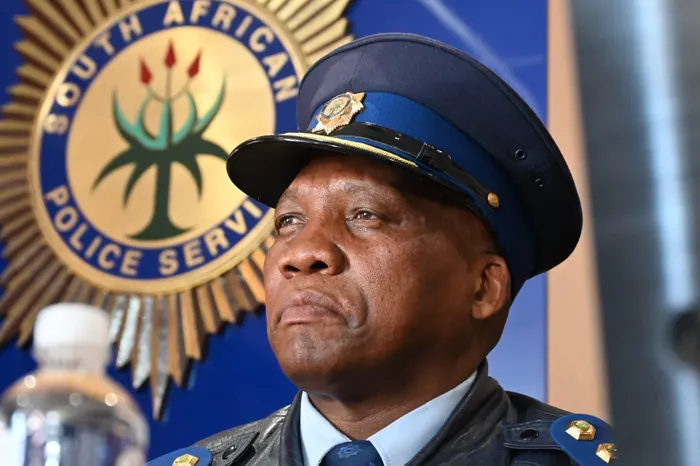
Western Cape Provincial Commissioner Lieutenant-General Sizakhele Dyantyi.
Political parties in the Western Cape upped the ante at the weekend as they sought to win the hearts and minds of 3.4 million registered voters in the province ahead of Wednesday's local government elections.
This comes as the SAPS announced that 33 high-risk voting stations have been identified in Cape Town.
Speaking at the launch of the IEC Western Cape Results Operations Centre at Century City on Sunday, Western Cape Provincial Commissioner, Lieutenant-General Sizakele Dyantyi said the police stations have been categorised according to the risk level and to ensure SAPS meets the minimum deployment of its personnel.
“That categorisation is done through the crime intelligence processes,” Dyantyi said.
Police identify 33 high-risk voting stations
“We only have 33 police stations categorised as high risk and the number of people who need to be deployed to a polling station is categorised in terms of the risk.”
Dyantyi stated the police have also looked at issues of political instability and political infighting within and among parties.
“We say political intolerance could also be one of the things that could be categorised as the risk that we are looking at as the SAPS.”
He mentioned Knysna, where a former mayor in Knysna was killed, and Vredenburg in Saldanha Municipality among high risk areas outside Cape Town.
Taxi violence adds to election security concerns
On Saturday, the Western Cape High Court issued an interim interdict against taxi associations, Codeta and CATA, following the flare up of taxi violence in parts of Cape Town.
The Western Cape Provincial Taxi Registrar has since suspended the registration of the CATA Langa Inter-township association for six months following an inquiry into unlawful operations in the Epping area.
Mobility MEC Isaac Sileku said on Saturday the urgent court interdict was sought to stop the killings, intimidation, threats, and unlawful road blockages, and to hold CATA and Codeta accountable for ensuring their members obey the law.
“The safety of commuters and the public come first. No one is above the law,” he said.
Parties make final campaign push
Dyantyi said law enforcement agencies have developed an integrated plan to deal with taxi violence.
“We know that we did not have any incident that has taken place in the past 48 hours. We continue with that plan because it's not going to end only now before the election,” he said.
As law enforcement agencies are on alert to any violence that may erupt, parties continued with their political activities across the province.
The SACP roped in its treasurer-general Joyce Moloi-Moropa in its last push in the province to Saldanha and Philippi.
Addressing the Red October rally in Philippi, Moloi-Moropa said: “We won't stand by and watch when things go wrong.”
The ANC did not leave anything to chance as it brought in some of its big guns from the national executive committee to complement work done in Khayelitsha by Communications and Digital Technology Deputy Minister Mondli Gungubele.
This included Higher Education Minister Buti Manamela, an SACP member who chose to campaign for the ANC rather than the SACP, who engaged residents through door-to-door mobilisation, community meetings and sectoral engagements in Ward 95.
As the DA kept its campaign going in the City, it reiterated its message to voters to not risk “coalition chaos”.
DA provincial leader Tertius Simmers and Premier Alan Winde spent time in the Garden Route.
Simmers urged Western Cape voters to make their voices heard.
Ipsos poll puts DA ahead in Cape Town
“Whether you support us, another party or are still undecided, your voice matters and your vote matters. On November 4, you have the opportunity to help shape the future of your municipality and the communities we all call home,” he said.
Meanwhile, the latest poll by Ipsos suggested that no party commanded majority support in the eight metros.
“Looking at the pre-election surveys conducted, we will probably have new coalition governments in most of the metropolitan municipalities after the elections, with numerous local and district councils also expected to be governed through coalition arrangements,” Ipsos political analyst Mari Harris said.
In the City of Cape Town, the DA was polled at 51%, followed by the ANC with 21%, EFF 10%, Patriotic Alliance 4%, ActionSA and MK Party 3% each and Freedom Front Plus 1%
However, Ipsos said consistent with trends observed in recent surveys, the DA appeared firmly ahead of its nearest competitors in the City.
It said the PA’s decision to exclude journalists from its public meetings may have affected its media exposure and public visibility during the campaign period.
“Current support levels suggest that the party is less likely to pose the significant challenge to the DA in Cape Town that some commentators anticipated earlier. However, the situation may be different in the rural areas of the Western Cape."