 Federal Chancellor Friedrich Merz (CDU, left) shakes hands with a robot alongside Karsten Wildberger (CDU), Federal Minister for Digitalization and State Modernization, at the 2026 Federal Government Digital Summit. Photo: picture alliance/dpa | Kay Nietfeld
Surge in German citizenship applications from descendants of Nazi victims, deadly Leipzig car attack suspect goes on trial, Germany pushes for faster AI development and more news on Tuesday, November 3rd.
Tuesday's top story: Surge in German citizenship applications from descendants of Nazi victims
Applications for German citizenship from victims of Nazi persecution and their descendants have risen sharply, driven largely by growing demand from Israel.
The Federal Office of Administration has received more than 170,000 restitution-based applications from around the world in recent years. Nearly 11,500 people were naturalised under these provisions in 2025, almost 60 percent more than the previous year.
Israeli citizens accounted for 5,924 applications in 2025, up from 3,640 in 2024. A further 2,995 came from the United States, while 1,508 involved applicants from European countries.
Germany’s Basic Law allows people stripped of citizenship by the Nazis, and their descendants, to reclaim it. Since 2021, eligibility has also covered families prevented from acquiring German citizenship because of Nazi persecution.
READ ALSO: 'My family fled the Nazis. Why did it take 18 years to reclaim German citizenship?'
Sociologist Lukas Fuchs of the German Center for Integration and Migration Research (DeZIM) said applications from Israel had surged since Hamas’s October 2023 attack and the ensuing Gaza war. For many families, he said, a German passport offers a “safety net” amid geopolitical uncertainty.
Other attractions include Germany’s reputation as a liberal democracy and easier access to study and travel across Europe. Brexit and Donald Trump’s return to the US presidency have also reportedly increased interest among eligible British and American families.
Don't miss our journalists' daily news roundup from Germany
Deadly Leipzig car attack suspect goes on trial
The trial began on Monday of a man suspected of ploughing his car into a crowd in the German city of Leipzig in May, killing two people.
The defendant, partially identified as Jeffrey K., 34, stands accused of two counts of murder and 85 counts of attempted murder.
A 63-year-old woman and a 77-year-old man were killed and several others injured.
Many witnesses "are still suffering from psychological problems" as a result, senior prosecutor Ulrich Jakob told the court.
The suspect himself, dressed in a grey and white hoodie, followed the proceedings with no visible emotion and spoke only to confirm his personal details.
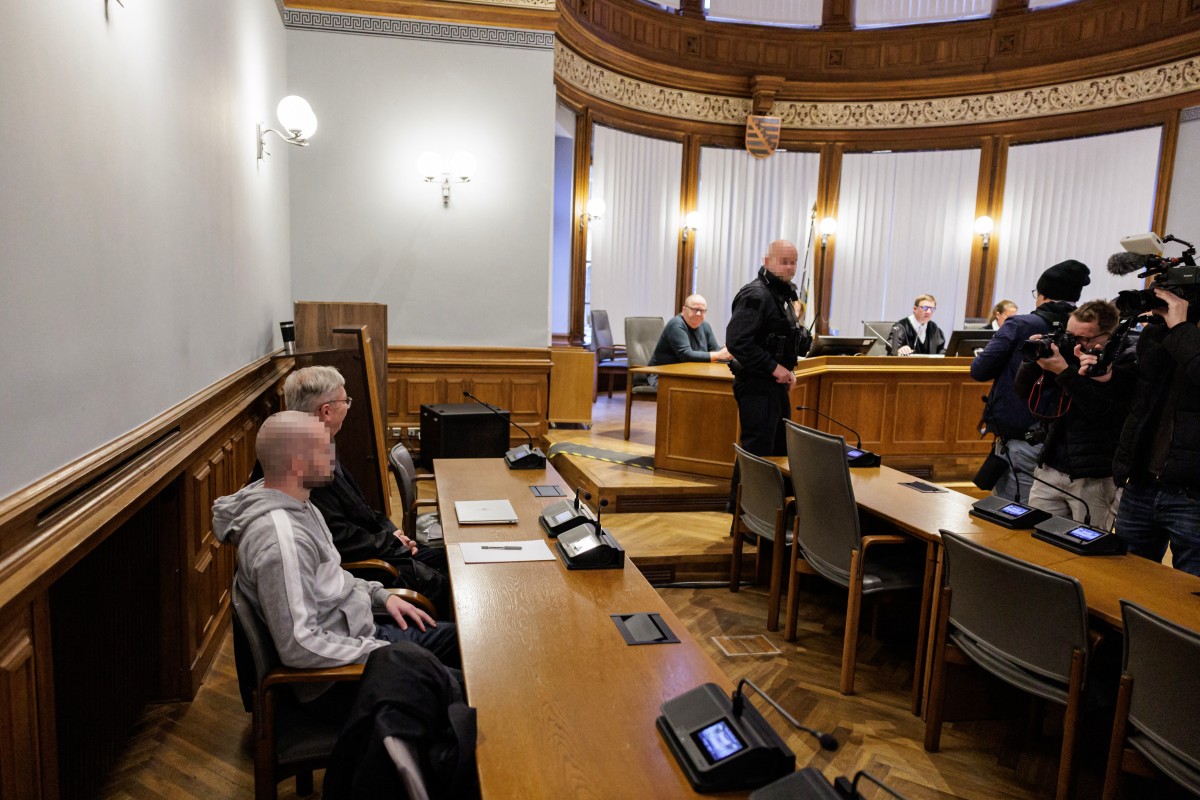
His defence lawyer said that the attack was a "human tragedy of shocking proportions" and that his client was suffering from a "situation he felt was hopeless", spurred by a custody dispute with his wife over their son.
The trial is expected to run until July 2027.
AfD leaked emails reveal former expulsion hearings against constitutional judge in Bavaria
Members of the far-right Alternative for Germany (AfD) in Bavaria had previously tried to expel Rüdiger Imgart from the party over his "racist statements" and connections to the "right-wing radical scene". Instead, the allegations were overruled and Imgart ascended to the highest court in Bavaria.
The fact that other AfD members had tried to expel Imgart over racism and extremist links was revealed by leaked emails and documents first reported by BR Research.
Accusations against him were said to include racist slurs posted on his Facebook page and also that he "considered cooperation with the NPD". The National Democratic Party (NPD) is a far-right neo-nazi party.
Through emails from the recent AfD leak reported by German media, it was revealed that Imgart appealed against the revocation of his membership rights in 2016.
About a year later, the party's Federal Arbitration Court (BSG) annulled sanctions that had been imposed during the proceedings because an application form had been missing a second signature.
Since then Imgart was elected to the city and district parliament of Weilheim, and then promoted to become a non-professional judge member of the Bavarian Constitutional Court.
In this way a man whose own district association wanted to exclude from the AfD, due to his racist and extremist tendances, now has a say in legal decisions regarding application of the state's constitution.
READ ALSO: A 'Hitler Pilgrimage' and trips to Russia - What has the mass AfD data leak revealed?
Germany pushes for faster AI development and greater digital sovereignty
Germany’s government has called for faster domestic AI development, warning that dependence on foreign technology could threaten growth, security and digital sovereignty.
Talking at the federal government’s 2026 Digital Summit on Monday in Berlin, Chancellor Friedrich Merz and Digital Affairs Minister Karsten Wildberger said Germany and Europe needed their own competitive AI companies and technologies.
They also backed closer cooperation with like-minded international partners, identifying Canada as particularly important.
Industry groups broadly supported the government’s ambitions. A Bitkom survey found that almost all German companies would prefer domestic AI products, although 64 percent would not accept higher prices or fewer features.
Business representatives called for stronger infrastructure, legal certainty, less bureaucracy and more favourable investment conditions. The VDMA engineering association also urged the creation of a stronger European AI ecosystem and a harmonised EU digital market.
Greenpeace welcomed domestic infrastructure in principle but warned that it should serve the public rather than US technology billionaires. The environmental group demanded transparency over data centres’ substantial water and energy consumption, alongside firm efficiency rules and continued priority for renewable power.
READ ALSO: Why Stuttgart has been named Germany's most digital city
Lufthansa raises fuel bill forecast as Iran war drives up costs
Lufthansa expects its fuel costs to reach €9.3 billion in 2026 as the war in Iran keeps global energy prices high.
The projected bill is €2 billion higher than last year and €600 million above the airline group’s previous estimate. Lufthansa has consequently lowered its forecast for core profit to between €1.7 billion and €2 billion, down from an earlier upper estimate of €2.2 billion.

The revised outlook covers the wider group, which includes Swiss, Brussels Airlines and Eurowings.
Despite rising costs, Lufthansa reported stronger-than-expected results for the third quarter. Net profit climbed 30 percent to €1.26 billion during the July-to-September period, while revenue rose nine percent year on year to €12.2 billion.
The company attributed the performance partly to robust passenger demand, particularly for premium tickets on routes to Asia and North America.
READ ALSO: Ryanair to hit passengers in Europe with 'double-digit' hikes in air fares
Become a member or log in to continue reading
More
Comments
Join the conversation in our comments section below. Share your own views and experience and if you have a question or suggestion for our journalists then email us at news@thelocal.de.