The Hawks have initiated an investigation into public sector procurement fraud following a formal criminal complaint regarding National Treasury's multi-billion rand RT46 transversal fleet management contract.
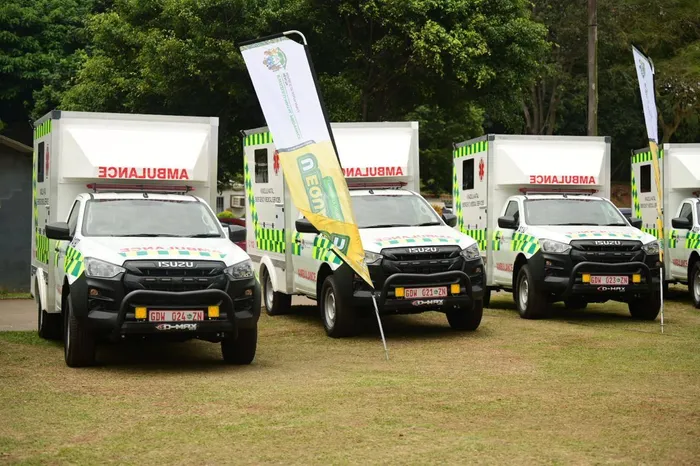
Image: KZN Department of Health / Facebook
The Hawks have launched an investigation into alleged corruption and fraud surrounding the awarding of a multi-billion-rand government vehicle fleet management contract to Afrirent (Pty) Ltd.
The investigation follows a criminal complaint lodged by the Automotive Workshop Association of South Africa (Awasa) with the South African Police Service (SAPS), citing alleged fraud, financial misconduct, contraventions of the Public Finance Management Act (PFMA), unlawful procurement practices and prejudice to historically disadvantaged businesses.
The case was opened at Vereeniging police station on October 20 before being transferred to the Hawks, who confirmed that an investigation was under way.
Afrirent was awarded a major portion of the National Treasury's transversal RT46 contract, worth more than R8.5 billion and running until June 2031. The company assumed operational responsibility on July 1, 2026, after being named the winning bidder for Category A, which covers the maintenance and repair of state vehicles.
The contract places Afrirent in charge of managing maintenance services for government fleets, including those used by SAPS, emergency medical services and scholar transport.
Awasa lodged the complaint after raising concerns that Afrirent was allegedly imposing unfavourable, take-it-or-leave-it agreements on subcontractors under intense time pressure.
The association also accused the company of operating a non-transparent work-allocation system that favoured large franchises and its own workshops at the expense of independent, black-owned small businesses.
In an affidavit, Awasa chairperson Lorette Kgwadi asked police to investigate Afrirent and transport officials for possible offences under the Prevention and Combating of Corrupt Activities Act (Precca) and the PFMA.
She alleged that the contractor's practices had resulted in irregular expenditure, economic harm and the financial collapse of historically disadvantaged small, medium and micro enterprises (SMMEs).
Awasa secretary-general Brian Jacobs, in a supporting affidavit, said work allocation appeared to be influenced by favouritism, personal relationships and improper considerations.
He alleged that the system enabled gatekeeping, bribery and the exclusion of historically disadvantaged businesses.
“These SMMEs, including myself, have been subjected to non-payment for work completed, partial payment without lawful justification, late payment beyond the 30-day PFMA requirement, and unlawful early-settlement deductions, including deductions imposed on invoices paid after 30 days,” Jacobs said.
He added that the practices resulted in financial losses, economic harm and the unlawful enrichment of the contractor.
The Retail Automobile Aftermarket Federation (RAAF), another industry advocacy organisation, raised similar concerns, accusing Afrirent of imposing restrictive and commercially punitive clauses in its standard merchant agreements.
RAAF also alleged that state vehicles, including police and health department vehicles, were being delivered to workshops without prior notification, procurement documentation or official job cards, potentially bypassing supply chain management requirements.
Gauteng police spokesperson Tintswalo Sibeko confirmed that a case of corruption and fraud had been opened and transferred to the Hawks. Hawks spokesperson Katlego Mogale also confirmed the investigation.
Afrirent, through its public relations agency, rejected allegations of corruption, fraud, financial misconduct and unlawful procurement.
Chief executive Thenjiwe Tsabedze said the company had prioritised addressing inherited backlogs, expanding its participating merchant network and strengthening compliance with National Treasury requirements since taking over the contract.
She said the concerns raised by Awasa largely related to merchant onboarding, verification, invoicing and authorisation processes, which were necessary to ensure compliance and accountability.
Tsabedze said Afrirent had engaged with Awasa and requested details of the merchants it represented and the specific challenges they faced.
“We have engaged with Awasa, a newly established association, and requested them to disclose the merchants they are representing, as well as the issues the member merchants are facing. However, Awasa has not been forthcoming which has made it incredibly difficult to verify their claims. Nevertheless, we remain committed to meaningful engagement,” she said.
She acknowledged the financial pressures facing workshops during the transition and said the company remained committed to fulfilling its contractual obligations and resolving operational challenges.
National Treasury said it was unaware of any criminal complaint lodged with SAPS and had not received formal notification of an investigation.
It said concerns raised by merchants were being addressed through existing contract management and oversight structures involving the Treasury, the National Department of Transport, participating institutions and Afrirent.
The Treasury said Afrirent, as the appointed contractor, remained responsible for resolving contractual issues and implementing corrective measures.
The latest allegations follow controversy surrounding the previous contractor, WesBank. In March, the KwaZulu-Natal Standing Committee on Public Accounts summoned WesBank and National Treasury over alleged failures in managing provincial vehicle fleets, including ambulances, police vehicles and school buses.
The committee also questioned WesBank about an alleged corrupt arrangement in which a senior police brigadier directed vehicle repairs to selected workshops in exchange for luxury assets, reportedly including a Lamborghini.
WesBank acknowledged that a scheme had been identified, saying employees faced internal disciplinary action, the brigadier's details had been referred to SAPS leadership and implicated suppliers had been blacklisted.