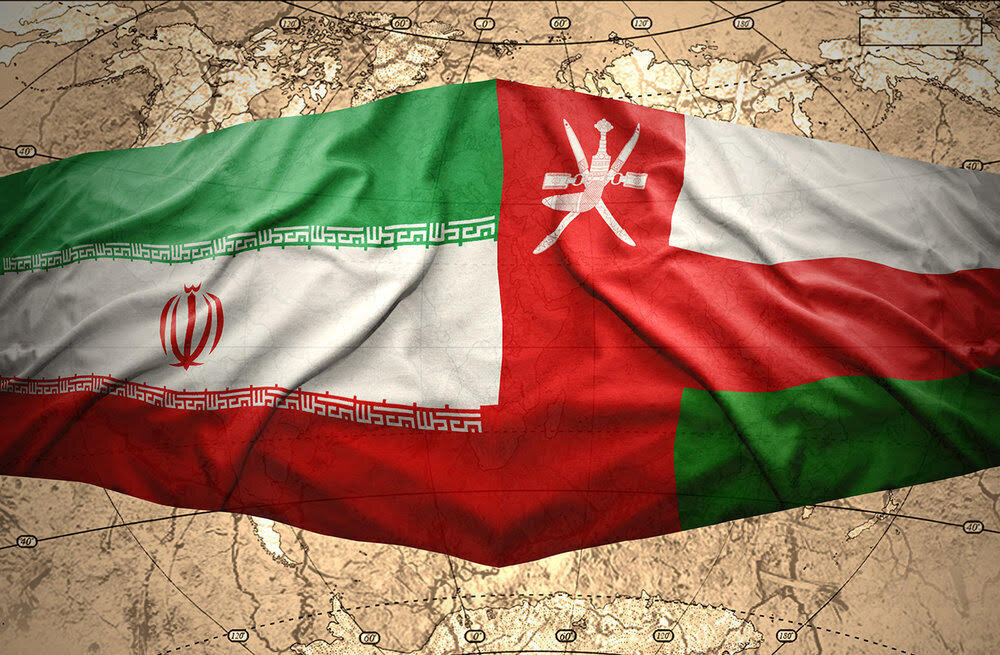
TEHRAN – Iran’s trade relations with its neighbors have taken on heightened importance amid shifting regional dynamics, and few partnerships illustrate this better than the enduring economic ties between Tehran and Muscat. While recent developments have cast a shadow over trade with some Persian Gulf states, Oman has emerged as a notable exception—a reliable and growing market for Iranian goods.
The latest figures from the Iran Trade Promotion Organization reveal a striking 23 percent increase in Iranian exports to the Sultanate during the first half of the current Iranian calendar year, underscoring the resilience of bilateral commerce and the potential for further expansion. As the two countries advance a preferential trade agreement and deepen customs cooperation, the trajectory of Iran-Oman trade offers a promising model for regional economic engagement. The following report examines the details behind this growth, the factors driving it, and the broader diplomatic and commercial framework that supports it.
The Director General of the West Asia and Africa Office of the Iran Trade Promotion Organization (TPO), describing Iran’s trade trend with some West Asian countries as positive, announced a 23 percent growth in Iran’s exports to Oman in the first six months of the current Iranian calendar year (March 21–September 21) compared with the same period last year.
According to a report by the Public Relations Office of the Iran Trade Promotion Organization, Abdolamir Rabihavi, referring to the impact of regional conditions and recent developments on the country’s foreign trade, said: “Despite the conditions prevailing in the West Asia region, Iran’s trade trend with some countries in this area, including Oman, has remained positive, and this trend is evident in the export statistics for the first half of the current year.”
According to the official, regional developments affected the volume of Iran’s trade with some Persian Gulf countries; however, among them, Oman—despite being located in the Persian Gulf region—was less affected by these conditions.
Rabihavi, referring to Iran’s exports to Oman, stated: Iran’s exports to this country in the first six months of 1405 experienced 23 percent growth compared with the same period in 1404, as the export value increased from $948 million to $1.164 billion.
He further referred to developments in trade routes and the country’s borders and stated: “In recent months, despite some problems on the country’s southern water routes, part of the restrictions on land routes have been removed, and the possibility of greater use of the capacity of land borders has been provided.”
Rabihavi expressed hope that if the positive trend of exports to regional countries continues in the second half of the year, Iran will see further growth in trade with countries in this area.
In late August, Rabihavi announced that the preferential trade agreement with Oman had been finalized after completing administrative procedures and had been submitted to the Parliament for final review.
In an exclusive interview with IRNA, he referred to the measures taken by the TPO during the 14th administration, and reported significant progress in trade diplomacy and the development of border and port infrastructure with neighboring countries, adding: “With the actions taken over the past two years, the organization is determined to facilitate and increase trade exchanges with regional countries.”
In late June, the heads of customs of Iran and Oman, on the sidelines of the World Customs Organization summit, emphasized the operationalization of the provisions of the agreement on mutual administrative assistance in customs matters and proposed the formation of a joint committee regarding the implementation of the agreement’s provisions.
Foroud Asgari, Deputy Minister of Economy and head of the Islamic Republic of Iran Customs Administration, and Said bin Khamis al-Ghaithi, head of the Royal Customs of Oman, in a bilateral meeting, emphasized increasing and expanding customs cooperation in line with the provisions of the signed agreement in customs fields.
The proposal to conduct study visits to customs offices and ports of destination and origin, as well as holding periodic meetings between the customs administrations of the two countries, were among the topics reviewed in this meeting.
Other topics discussed in this meeting included the development of mutual cooperation and exchange of experiences in the field of combating smuggling and customs violations, and holding continuous joint meetings between customs managers of the two countries for maximum coordination to facilitate trade.
Holding joint meetings to exchange educational experiences, given the establishment of the World Customs Organization Regional Training Center (RTC) in the Islamic Republic of Iran’s Customs Administration, was one of the points raised by Iran’s Customs in this meeting.
Iran and Oman signed 18 memoranda of understanding in various fields during the official two-day visit of Iranian President Masoud Pezeshkian to Muscat in May 2025.
The agreements, signed on the sidelines of the Iran-Oman Joint Economic Committee meeting, aimed to deepen ties in multiple sectors, including legal, economic, political, cultural, educational, health, defense, media, technology, energy, and mining.
In a symbolic gesture highlighting cultural and historical bonds, officials from both nations also unveiled a commemorative joint postage stamp.
President Pezeshkian arrived in Muscat on May 27 at the official invitation of Oman’s Sultan Haitham bin Tariq. Following a formal welcoming ceremony at Muscat International Airport, Pezeshkian held a meeting with Oman’s Sultan. The visit continued with a joint session between high-ranking delegations from both countries.
During the meeting, Pezeshkian said that Iran is ready to boost cooperation with Oman in all fields, adding that the two countries possess capabilities that can be employed for the well-being and progress of the two nations as well as that of other regional nations.
“We are ready to do whatever is within our capability for the dignity and greatness of Muslims. Each of us has capacities that can be employed for the well-being and progress of one another and of other nations in the region,” Pezeshkian said.
Sultan Haitham also welcomed closer ties, saying that he agrees that if the avenues for business activities are opened, the two countries “will witness a significant leap in the bilateral relations.”
“The relations between Iranian and Omani ports must be developed, and the rail capacity from northern to southern Iran is of great commercial importance to us,” he said, adding that more support is needed for cooperation in the energy sector.
The 23 percent surge in Iran’s exports to Oman during the first half of 1405 is more than a statistical highlight; it reflects a deliberate and sustained effort to strengthen bilateral ties through trade diplomacy, infrastructure development, and institutional cooperation. From the finalization of a preferential trade agreement awaiting parliamentary approval to high-level customs talks and the signing of 18 memoranda of understanding during President Pezeshkian’s visit to Muscat, the foundation for deeper economic integration is being laid. As both nations look ahead to the second half of the year, the continued positive trend in exports—supported by improved land border access and expanded port relations—offers reason for optimism. With political will on both sides and a shared commitment to overcoming regional challenges, Iran and Oman appear well-positioned to translate these gains into a lasting and mutually beneficial commercial partnership.