
With national diesel prices inching towards $7/gallon and Tesla’s $290,000 Semi trucks finally making their way to paying customers, it’s worth revisiting how Trump’s One Big, Beautiful Bill Act (OBBA) helped beef up the Section 179 deduction, and look again at how it could help your fleet ditch diesel sooner rather than later.
At the core of this thinking is the fact that the IRS does not distinguish between fuel choices, so there’s no separate depreciation category for electric- vs. diesel-fueled commercial trucks. The relevant classifications, then, are the vehicle’s use and property classes, and under the IRS’ depreciation guidelines, tractor units designed for over-the-road use are classified as 3-year properties and fall under the 20-year recovery threshold for 100% bonus depreciation, Tesla’s electric Semi can benefit from 179 just like their diesel-powered competitors. But don’t get me wrong – this isn’t just great news for Tesla Semi buyers. Electric garbage trucks, electric vocational trucks, battery electric reefer trailers, and even some big electric forklifts can potentially benefit from the same accelerated depreciation rules, since the IRS lists these as, “specialized business vehicles,” with no distinction between electric, diesel, natural gas, hydrogen, magic pixie dust, anything else.
There’s been some additional movement on the tax front since our original article, too. Earlier this year, the IRS issued Notice 2026-11, providing additional guidance on the permanent restoration of 100% bonus depreciation for qualifying property acquired after January 19, 2025. That means that eligible businesses might be able to combine Section 179 expensing with bonus depreciation when ordering qualifying fleet equipment – and ordering is the key word. The IRS has specific rules for determining when equipment is considered acquired under a written, binding contract, and your tax professional and truck dealer can probably help you figure out a way to make those rules work in your favor.
You can check out the original article (with a few corrections sprinkled in to align with the latest guidance from Notice 2026-11 and Publication 946) below. Give it a read, read the disclaimer twice, then let us know what you think in the comments.
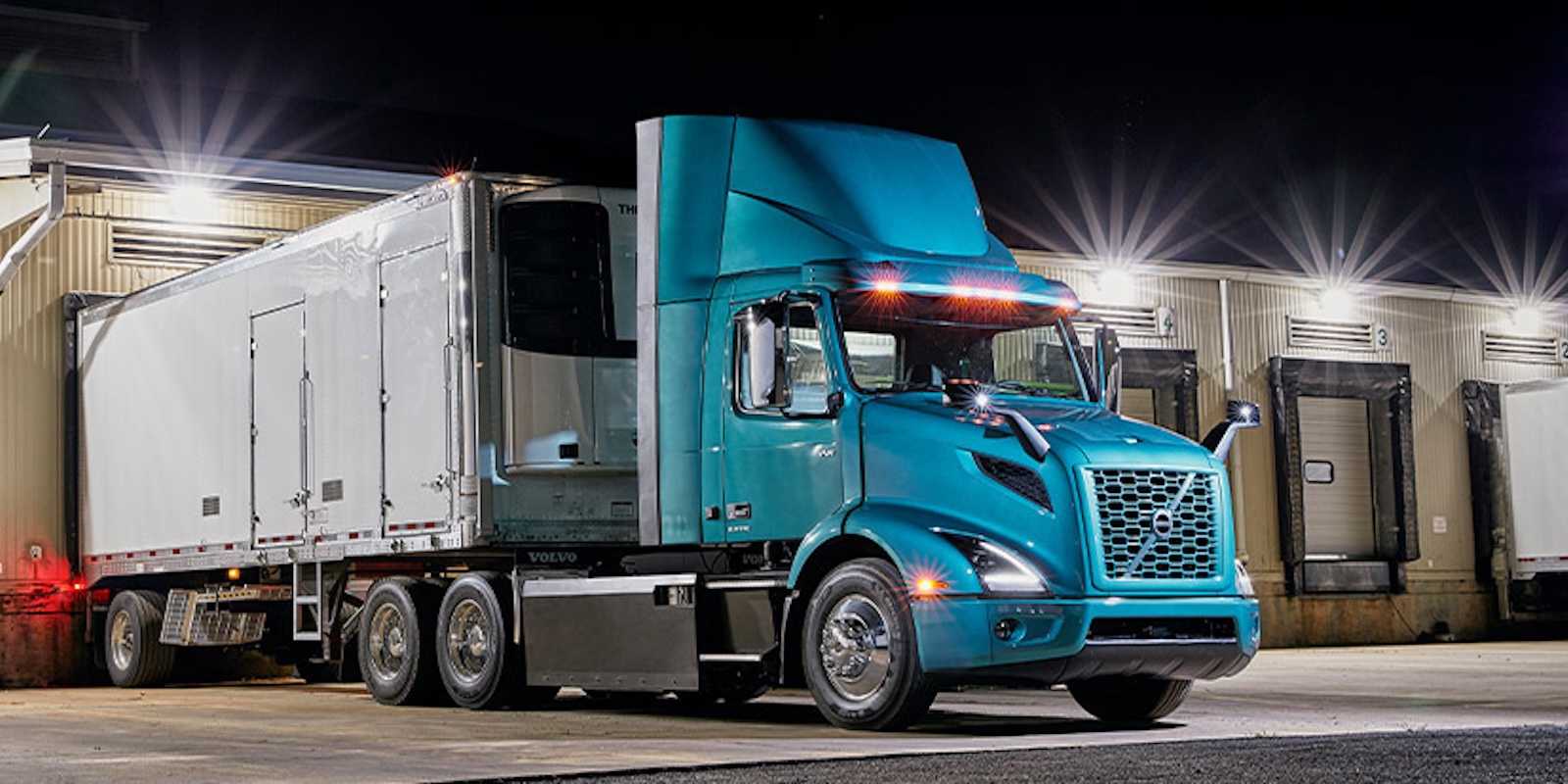 VNR Electric semi; by Volvo Trucks.
After the Commercial Clean Vehicle Credit (Section 45W) expired on September 30, the “experts” rushed out predictions of an EV sales slowdown in Q4. But, with over 6,800 pages in the Internal Revenue Code still in play, a turbocharged Section 179 tax deduction could still power a strong year for commercial EVs.
The One Big, Beautiful Bill Act (OBBBA) of 2025 gutted America’s energy independence goals and ensuring its auto industry would fall even further behind the Chinese in the EV race, but the loss of Section 45W wasn’t the only change written into the IRS’ rulebook. Section 179, an immediate expense reduction that business owners can take on depreciable equipment assets, has been made significantly more powerful for 2025.
The section 179 expense deduction is limited to such items as cars, office equipment, business machinery, and computers. This speedy deduction can provide substantial tax relief for business owners who are purchasing startup equipment.
The revised Section 179 tax credit (or, more accurately, expense reduction) allows for a 100% deduction for equipment purchases has doubled to $2.5 million, with a phase-out kicking in at $4 million of capital investments that drops to zero at $6.5 million. That can be applied to new and used vehicles, as well as charging infrastructure, battery energy storage systems, specialized tools, and more (as long as they’re new to you).
Work the tax code
 By Mira Norian; via Investopedia.
“But wait,” as they say. “There’s more!” A revised Section 168(k) also allows for bonus depreciation on eligible equipment and property, accelerating depreciation for a reduced tax burden.
Section 179 and bonus depreciation aren’t mutually exclusive, either, which means that businesses don’t have to exceed the Section 179 spending cap to be able to take advantage of both. A fleet operator can elect to expense a portion of a qualifying vehicle or equipment purchase under Section 179, then apply bonus depreciation to the remaining eligible basis.
With 100% bonus depreciation restored for qualifying property acquired after January 19, 2025, that combination could allow businesses to deduct the entire qualifying business-use cost of an electric truck or other commercial equipment in the first year, subject to applicable eligibility requirements and limitations.
It’s a bit convoluted (what good tax code isn’t?), but these tax incentives are great for businesses looking to buy enough electric equipment assets to exceed the Section 179 spending limit – and, given the new Uber/Tesla semi truck purchase plan, the continued growth of the electric terminal tractor market, and the willingness of several utilities to incentivize both electric commercial vehicles and the deployment of smart EV charging infrastructure, that number may be bigger than you think.
Electrek’s Take Disclaimer
 L25 Electric wheel loader; by Volvo CE.
Tax law is weird. Not only are there Federal tax laws and rules that need to be followed, but state and even local county and city rules, as well. As such, you want to make sure they don’t get you the way the got Capone.
Even worse, your favorite journalist (Hi!) is probably an idiot. Get a certified accountant and tax law expert to help walk you through the dirtier details of your specific scenario – but don’t let the complexity of human interaction slow you down, either. The really rich guys you know pay pennies on the tax dollar compared to you and me, because they’re not afraid to ask their accountants for help.
The TL;DR version, though, is this: there’s still plenty of incentives out there for fleet operators looking to electrify their operations.
SOURCES | IMAGES: Equipment World, Investopedia, Volvo.

If you’re considering going solar, it’s always a good idea to get quotes from a few installers. To make sure you find a trusted, reliable solar installer near you that offers competitive pricing, check out EnergySage, a free service that makes it easy for you to go solar. It has hundreds of pre-vetted solar installers competing for your business, ensuring you get high-quality solutions and save 20-30% compared to going it alone. Plus, it’s free to use, and you won’t get sales calls until you select an installer and share your phone number with them.
Your personalized solar quotes are easy to compare online and you’ll get access to unbiased Energy Advisors to help you every step of the way. Get started here.
FTC: We use income earning auto affiliate links. More.
Subscribe to Electrek on YouTube for exclusive videos and subscribe to the podcast.
Comments
Expand Close comments Expand Close commentsGuides

EV Federal Tax Credit
EV incentives
Author
 Jo Borrás
volvojo1
I’ve been involved in the electric vehicle transition in one way or another since 1997, and have covered the industry as a journalist since 2008. You can catch more of my work on Quick Charge and The Heavy Equipment Podcast with Mike Switzer.
Comments
Guides
EV Federal Tax Credit
EV incentives
Author
NOTE: any opinions expressed here are solely my own and do not necessarily reflect those of the Federal government, the State of Illinois, Electrek, or anyone else. Nothing here should be interpreted as a statement of official policy, legal guidance, or an endorsement unless expressly labeled as such.
Jo Borrás's favorite gear

Establish office dominance with this super creamy blank key masterpiece that makes it easy.

Find a reliable home solar and battery installer and save 20-30% compared to going it alone.