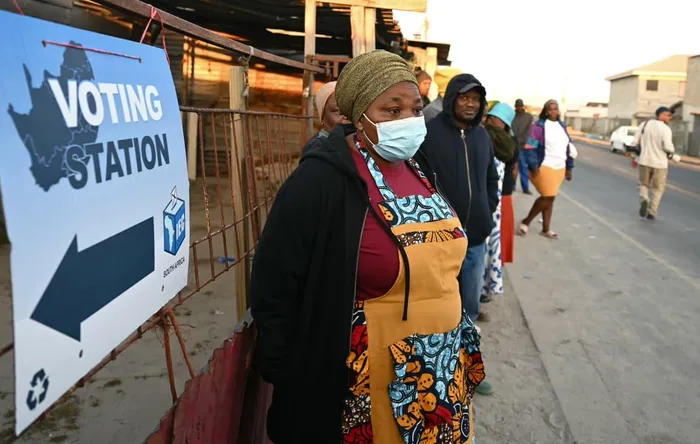
Residents have slowly started queuing at Monwabisi Park in Harare, Khayelitsha, as voting gets underway in the local government elections.
Service delivery, access to basic services, and better opportunities for young people are among the key issues shaping the choices of Khayelitsha voters as residents head to the polls in the local government elections.
As voters queue at polling stations to exercise their democratic right, some say their support for political parties is driven by what they believe the parties can deliver, while others base their decisions on their experiences with political leadership over the years.
Thando Mkiva, a Khayelitsha voter who previously supported the African National Congress (ANC) before switching to the Economic Freedom Fighters (EFF), said he believed the EFF had demonstrated its commitment to improving people’s lives.
Why one voter switched from the ANC to the EFF
Mkiva said his support for the party was influenced by initiatives he associated with its involvement in local governance, including opportunities for young people, employment in the security sector and clothing initiatives aimed at supporting children.
Education was another key factor in his decision to support the EFF. He said his child had benefited from free education and maintained that children should not be expected to pay school fees at public schools designated as no-fee schools.
He also urged residents who had become disillusioned with elections because of poor service delivery not to lose faith in the voting process, arguing that citizens should not give up their opportunity to participate in choosing their political leadership.
Calls for service-delivery improvements
Meanwhile, United Democratic Movement (UDM) representative Mabhuti James Khanzi said he was seeking meaningful change, particularly in service delivery, and believed his party could help improve conditions in communities.
Khanzi said his confidence in the UDM was rooted in what he described as the party’s commitment to fighting for people’s rights and assisting communities facing challenges.
He also expressed confidence in the party’s campaign efforts, saying its members had done their best to reach voters despite what he described as attempts by others to undermine their work.