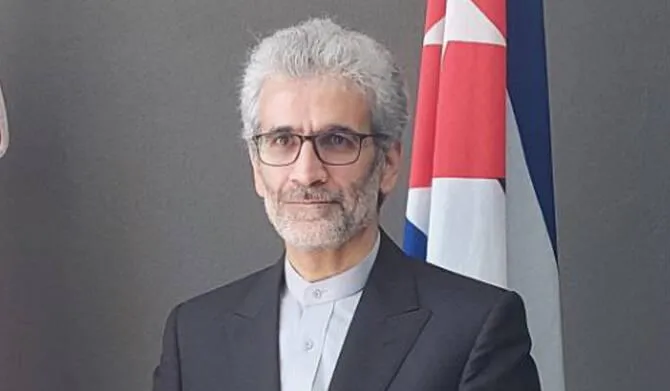
Iranian ambassador to South Africa Mansour Shakib Mehr.
The contemporary global landscape stands at a critical historical crossroads. For decades, the international system has been dominated by a unipolar paradigm characterised by the hegemony of a few self-appointed powers, systemic double standards and the erosion of multilateralism. Today, the escalating crises across West Asia and beyond are a stark reminder that true peace and security cannot be achieved through dominance, coercion or external intervention.
The security architecture of West Asia has suffered systemic instability, driven primarily by the destabilising presence, military interventions and aggressive policies of the Israeli regime, backed by external patrons. Persistent violations of international law, state-sponsored terrorism and relentless aggression against regional populations have turned West Asia into one of the most volatile regions in the world.
Iran firmly maintains that regional security must be ensured by the nations of the region themselves, without malign foreign actors and external meddlers. Sustainable peace cannot be imported or imposed by trans-regional powers whose primary objective is the plundering of resources and the fragmentation of sovereign states. Neighbouring countries share a common destiny. Through inclusive regional dialogue, mutual respect for sovereignty and cooperative security frameworks, West Asian nations have the inherent capacity to safeguard their own stability and foster enduring peace.
Demonstrating this practical commitment to endogenous regional security, Tehran recently hosted a high-level diplomatic and security meeting of senior security, intelligence and defence officials from Türkiye, Saudi Arabia and Pakistan. This landmark quadrilateral meeting underscores a collective effort among key regional states to consult, build confidence and establish autonomous security frameworks. It shows that constructive regional engagement, rather than Western military umbrellas, is the true path to long-term stability and to countering Israeli aggression.
Global security is a collective responsibility that requires the active, equitable participation of all nations, free from the dictates and bullying of powers accustomed to imposing their will by force. The era of unilateralism and hegemony is rapidly giving way to a multipolar reality.
To counter the coercive economic and political measures of traditional Western hegemony, developing nations must accelerate South-South cooperation. Multilateral platforms such as the Non-Aligned Movement (NAM) and BRICS offer indispensable frameworks for solidarity, economic independence and strategic alignment. By pooling resources, fostering trade in local currencies and leveraging collective diplomatic weight, the Global South can reshape the architecture of global governance into one that reflects equity, mutual respect and shared prosperity, rather than subordination to a privileged few.
The foundational pillars of the international order, namely state sovereignty and the right to self-determination, are under constant assault by imperialist forces. History shows that nations that refuse to bow to external coercion have consistently defended their independence, dealing severe blows to the arrogant ambitions of hegemonic powers.
Iran emphasises the absolute necessity for all states to adhere strictly to the principle of sovereign equality. The arbitrary imposition of unilateral coercive measures, economic blockades and political subversion against independent states constitutes a flagrant violation of the United Nations Charter. The Global South has repeatedly shown that resilience, unity and adherence to national sovereignty are the ultimate shields against historical bullying, and that dominance through brute force is an outdated and failing strategy.
Human rights must not be weaponised as a geopolitical tool of the powerful against developing nations. True human rights advocacy requires a non-selective, universal approach that prioritises justice for the victims of state-sponsored atrocities and war crimes.
International criminal institutions and legal instruments must be used firmly and transparently to prosecute the architects and perpetrators of heinous crimes. This includes holding to account officials of the Israeli regime and the United States for their alleged war crimes, crimes against humanity and genocide against the Palestinian people, as well as historical and contemporary acts of state terrorism and aggression against the Iranian nation, including tragedies such as the Minab massacres, in which innocent civilians bore the brunt of imperialist violence.
International law must never be allowed to function as an instrument of the powerful to subjugate the Global South. Impunity for Western regimes and their proxies must end, and global accountability must be restored without prejudice or political shielding.
The Islamic Republic of Iran reaffirms its commitment to deepening bilateral and multilateral ties with all progressive partners within the Global South. Together, through unwavering adherence to international law, mutual respect for sovereignty and steadfast resistance to bullying and unilateralism, we can forge a genuinely just, secure and multipolar world order for future generations.