The ink had hardly dried under articles explaining lessons learned from Péter Magyar’s electoral overthrow of Hungary’s government, when Serbia’s Student List managed to overthrow the semi-authoritarian Aleksandar Vučić.
Both cases had similarities: long-standing rulers that lied and flaunted their corruption ever more openly; they were ripe for defeat.
In both cases the opposition avoided strongly partisan positioning and instead focused on state functioning and anti-corruption.
Intriguingly, they had almost identical results: 53 percent of the vote for the opposition, 39 percent for the incumbent party. In both cases the opposition showed unity and campaigned across the country and on social media; a well-known ingredient of any campaign to overthrow entrenched authoritarians.
Read more
Serbia’s student protestors win parliamentary majority – setting scene for showdown with Vučić in December’s presidential poll
In other ways the two cases are strikingly different.
The Hungarian campaign was focused on Magyar, a consummate politician and former Fidesz member, who knew the incumbent party from the inside.
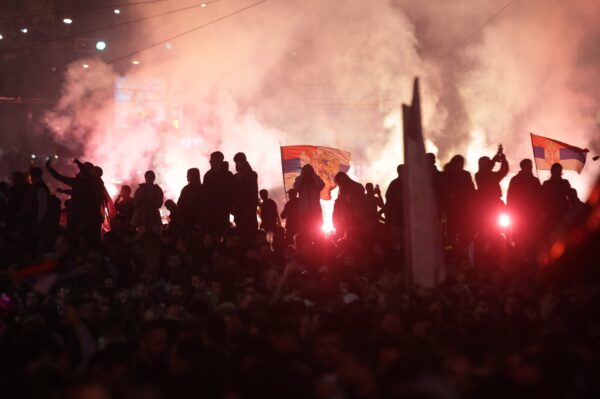
In Serbia a collective of students from different universities turned massive mobilisation against the corrupt government into an electoral platform.
In Hungary, Magyar dominated his party, in Serbia, the student collective reached decisions democratically, voting on all major points; an extreme contrast between a one-man show and a movement that hardly had any individual faces.
What can we learn from these elections?
First, we should not get fixated on silver bullets. One success story does not mean that the same recipe works elsewhere. Social movements and electoral campaigns are highly complex and contingent on circumstances. No leader like Magyar appeared in Serbia, no massive student initiative developed in Hungary, although both had similar problems of political repression by the ruling party.
This article continues, but the full version is available only to EUobserver.com subscribers. Visit account.euobserver.com/membership