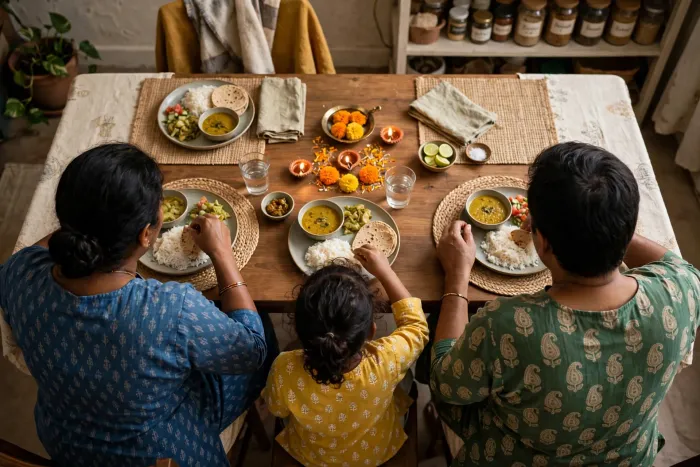
Rising food, electricity and transport costs are prompting some South African families to buy less, share hosting expenses and opt for smaller Diwali gatherings.
FROM the cost of groceries and electricity to the price of ingredients for traditional sweetmeats and savouries, families are thinking twice about how much they spend on the Festival of Lights.
Experts say while the desire to uphold traditions remains, some households are forced to cut back on new clothes, scale down celebrations, buy smaller quantities of food and find ways to share hosting costs.
Sanisha Packirisamy, group economist at Momentum Group, said Diwali spending was concentrated in a short window and covered food, clothing, gifts, décor and hosting. This, therefore, puts pressure on household cash flow when many families are already stretched.
"Households will adjust through trade-offs, including smaller gatherings, fewer new purchases and more homemade items," said Packirisamy.
She said Diwali was particularly affected by food price increases because of the amount households spend on ingredients such as flour, sugar, cooking oil, dairy and nuts.
"At the same time, electricity and transport costs have risen, which raises the cost of cooking, lighting and travelling to visit family. Households respond rationally to these pressures by substituting and shifting spending away from non-essentials such as new outfits and elaborate décor," she explained.
Niresh Gopichand, risk director at Atlas Finance, said the cost of preparing traditional festive food had been particularly noticeable, forcing households to rethink how much they baked and entertained.
"You can feel the financial squeeze across every part of the preparations this year. Preparing traditional trays of sweetmeats and savoury snacks to share generously with family, neighbours and those in need is a sacred tradition, but steep increases in basic ingredients like butter, ghee, oil, and sugar have made large-scale baking much harder to manage.
"Skyrocketing electricity tariffs also add up quickly when you consider long hours of baking and decorative lighting," said Gopichand.
Despite this in true Diwali spirit, families are adapting through unity and community, he added.
"Relatives are pooling resources to buy baking ingredients in bulk, hosting combined family prayers and meals. We also see communities coming together to partake in meals and evening celebrations."
He said younger generations were also moving towards smaller, more meaningful celebrations.
"In a remarkably positive and grounding way, Gen Z and millennial South Africans have changed the extravagant celebrations to smaller more meaningful gatherings. The younger generations bring families together.
"They are reconnecting deeply with the foundational values of the festival. Diwali celebrations, like any other celebrations, are evolving, but the spirit of Diwali will continue for generations to come."
For some households, the challenge goes beyond scaling back celebrations and extends to affording the basic necessities needed to observe the festival.
Dr Daniel Chettiar, founder of DSK Group NPO, said the organisation had seen a noticeable increase in requests for Diwali hampers this year, including from families who had never previously needed assistance.
"This is deeply concerning, as it reflects the growing financial strain on ordinary households. More families are finding that their income simply cannot keep pace with the rising cost of living, making even a basic Diwali celebration a financial challenge," said Chettiar.
He said the organisation was seeing families forced to choose between household necessities and festive preparations.
"We are seeing families having to prioritise survival over celebration. The cost of food, electricity, transport and other basic necessities is consuming household budgets, leaving little for festive preparations. For many, the concern is no longer about celebrating lavishly, but about being able to observe Diwali with a sense of dignity, hope and belonging."
Chettiar said the rising cost of groceries was also affecting the organisation's ability to provide assistance, with donations no longer going as far as they had in previous years.
"The same contribution that may have covered a more substantial hamper in previous years now buys considerably less. We remain deeply grateful to every donor, but the gap between what is needed and what we can provide is becoming increasingly difficult to bridge."
The financial squeeze is also being felt by businesses selling traditional Diwali goods.
However, Ravi Maharaj of Indian Delights, a sweetmeats and savouries store in Durban, said orders had increased this year but customers were spending less.
"Judging from the orders this year there has been an increase in orders but the spend from corporate and individuals has decreased marginally due to rising fuel and interest rates. We have absorbed most of the raw material costs for the year so far hence our prices are lower than competitors but not comprised on quality.
"Even the individual spend in store has seen a decline as customers are more aware of their spending and they tend not to overspend on extra items," said Maharaj.
He said the store had followed a new trend by introducing more affordable packs of sweetmeats at lower prices.