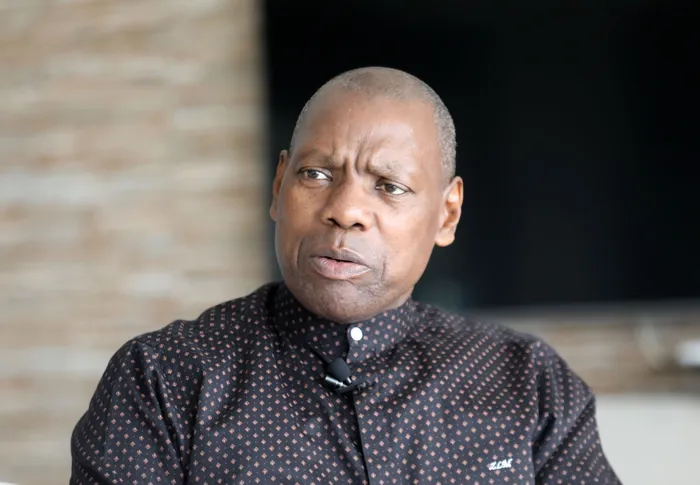
Dr Zweli Mlkhize is the chairperson of the Parliamentary Portfolio Committee on Cooperative Governance and Traditional Affairs.
The appointment of skilled and qualified people in municipalities must be a government priority if South Africa is to address local government dysfunctionality, improve governance and strengthen financial management.
This is according to the chairperson of Parliament’s Co-operative Governance and Traditional Affairs (CoGTA) Portfolio Committee, Zweli Mkhize, who believes skills shortages and a lack of capacity are undermining service delivery.
Mkhize said his committee, which oversees the local government sphere, had identified the deployment of capable councillors, good governance, tackling corruption and financial mismanagement, and infrastructure maintenance as key priorities for incoming municipal councils.
“The issue of skills development is fundamental across all the sectors, and for the issues (in municipalities) to be corrected, it presupposes that you have capable individuals, professional technical teams that know what they are doing according to their technical know-how to drive the operations of the municipality.
“All of that is a cross-cutting matter that must be the lifeblood of a municipality that needs to be correcting its dysfunctionality and improving on governance, financial management and financial systems.”
He said municipalities needed mechanisms to audit the skills and qualifications of officials to establish whether they were suitably equipped for the positions they occupied.
“All of those issues are dependent on the skills of the people who are involved, and therefore, we need to have a mechanism of auditing skills right across municipalities to check whether, in fact, people who are there can, in fact, qualify for the position that they've been given.”
Mkhize, who recently raised the issue of skills shortages and development with Deputy President Paul Mashatile in Parliament, said building capacity had to extend across all levels of local government, from councillors, mayors and speakers to frontline service delivery officials.
He said this required ongoing monitoring at both municipal and national government level, as well as a commitment to professionalising the public service.
“It needs to be monitored on an ongoing basis, not just at the municipal level, but at a very senior national government level. Once you go that route, you need to understand that it means professionalisation of service, and the professionalisation of service basically means that no person must be appointed unless there is proof of their capacity to do the work, and no manager, or official, should operate, except it is based on proper technical know-how, skills, research and the matching of the solution to the challenges that the communities face.”
On addressing municipal dysfunctionality, Mkhize said several factors contributed to instability, including political conflict, political interference, the blurring of the political-administrative boundary, and a failure to foster a culture of accountability.
He said these problems affected council decision-making, public participation in consultations, budget processes and accountability on service delivery, with knock-on effects on employment and local economic development.
“You need the municipal machinery to be functional. So that is one major issue that needs to be dealt with.”
With municipalities grappling with water, sanitation and electricity challenges, Mkhize also stressed the importance of maintaining infrastructure and ensuring investment was aligned with communities' needs.
University of the Free State's Dr Harlan Cloete said it was an indictment on the entire system that South Africa was still grappling with skills development shortcomings decades after the Skills Development Act of 1998 was promulgated.
The Act provides a framework for skills development, while the Municipal Staff Regulations, promulgated shortly after the 2021 local government elections, set out competency requirements for municipalities, including processes for recruitment and selection.
“The institutional framework is there. But the research that we conducted over the last couple of years points to the fact that we are not managing the development of people properly. People are appointed into positions without the necessary qualifications.”
Cloete said recent research had found that municipal managers often lacked either the competence or the willingness to oversee staff development, leaving the responsibility to human resources departments despite regulations clearly outlining their role.
“Sometimes they lack the knowledge, because the prevailing management model in South Africa is still very much baaskap: fear, being rude, and that people must jump and be afraid when the boss is around. That is still very much prevalent in municipalities.”
In his response to Mkhize, Mashatile said the Human Resource Development Council of South Africa (HRDC) contributed to addressing local government skills shortages by coordinating national human resource development priorities, promoting partnerships, and strengthening accountability for implementation.
“Its contribution is to connect skills development with the capabilities required for effective municipal governance and service delivery,” he said.
Mashatile said the Reconceptualised Human Resource Development Strategy 2025–2035 and its implementation framework, the Master Skills Plan 2025–2030, were launched at the fifth HRDC Summit in April this year.
“These instruments provide the framework for improving coordination and aligning skills development with economic and societal needs.
“Of relevance to local government is the strategic goal of building a capable, ethical and developmental state. The Master Skills Plan translates this priority into a focus on improving governance, leadership and management in the public sector.”